
![Sol Syanide™ [Æ] [13]'s profile picture](../media/pfp/1782055432_374d1940.webp)


"These fashions are not distinct"
"These labels never existed in the 2000s/these substyles did not exist"
While yes, not everything within the subculture needs to be labelled, as the whole point of the subculture is being yourself, there WERE trends and "sects" of the subculture that were large enough to be considered their own "substyle" within it that need 2 be acknowledged.
Each substyle I have listed here wasn't just unique in its fashion, but also its lifestyle & attitude. People forget that the scene subculture overall had multiple facets and that over time and depending on location, fashion and attitude shifted.
-Early Scene (mid 2000s; beginning of the subculture)
-"MySpace"/HxC Scene (the more music focused + bright coloured branch; what people usually recognise as scene)
-BR00TAL Scene (the edgier style adopted by most perfection/vanity groups)
- Raver Scene (EDM & rave culture-centred substyle)
-Swag Scene (early 2010s; the dying leg of MySpace & the og subculture)
-"Indie" Scene (commonly known as "Tumblr" or "Pastel" scene. early 2010s~2016)
THESE ARE ALL SHORTENED ANALYSES! I'm going to make more in-depth blogs on each one soon :-)
EARLY SCENE
Circa 2003-2006 (the early stage of scene as a subculture)
Scene stemmed from the emo and punk subcultures. However, because it was adopted by majority younger teens (13-15), it did not have a big emphasis on politics, unlike the cultures it stemmed from.
Because of this, you will notice that many (not all, of course) 2000s scene kids actively said slurs, were racist/homophobic, and overall were discriminatory. This is also a reflection of societal norms at the time, as again, the majority of scene kids WERE kids themselves.
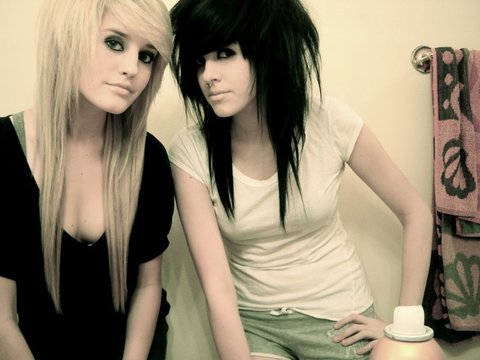
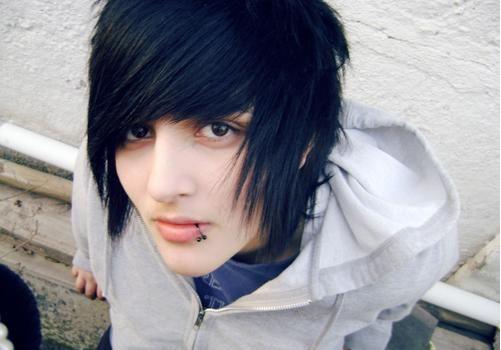
In comparison to other substyles, this one mainly demonstrated itself through choppy, side-banged hair that is associated with the scene subculture as a whole. Any everyday clothes would work as long as you had the side part and teased hair.
Associated Music Genres:Rock (alt & math), metal, and early "crabcore" bands.
Some Artists: Animosity, The Red Chord, Arsonists Get All the Girls, Duck Duck Goose, In Dying Arms, Attila
Clothes: Literally anything. A lot of people wore Abercombie, Hollister, etc., but those were just popular 2000s brands. Fashion in terms of clothes was not important to the subculture at this point in time.
Hair: Choppy, angled bangs in combination with a side-part (which was already mainstream in 2000s fashion). Bright-coloured hair was not as popular yet, as many kids still only just starting to experiment with their hair (that doesn't mean that some people did not start dyeing their hair; it was just not as prominent). Teasing was not uncommon, but it was not to the level as to where later scenesters did it.
Makeup: Makeup was not a necessity. While some people opted to do it, if you did not do it, you would not be labelled a poser. Eyeliner was a look for both girls and guys, with inspiration directly taken from the punk and emo subcultures before them. Guys simply did a "rim" around their eyes. Girls usually added some black eyeshadow on the eyelid as well, but not extremely heavily.
Lifestyle: Scene was still in its VERY early stages. The majority of scene kids were younger kids who lacked the understanding of the political nature of other subcultures, but wanted to look "cool". They saw it as cool and rebellious. Rebellious against what? Anything personal to them, not necessarily a larger system. There were not necessarily any politics that all scene kids had to adhere to. At this stage in its lifespan, the scene subculture was about being yourself and not being afraid to experiment with your appearance. Because of this, the scene subculture was not a tight-knit community and initially spread on smaller forums.
This is originally where the idea of scene being a "poser" subculture originated from. It's not a "poser" in the sense of fashion, music, etc., but rather the fact that it didnt have the political root that other alternative subcultures had.More on this in a later blog.
When MySpace came into existence with its greater reach around the world, the scene subculture began to spread.
EXAMPLES:
The earliest photos tagged with "scene" in the sense of the subculture on the internet appeared around 2005 and 2007. Discourse surrounding scenesters was more prominent on text forums and small image board sites (and usually, it was not positive).

And arguably one of the most popular images of scene kids:

"MYSPACE"/HxC SCENE
Circa 2006-2011 (the early stage of scene as a subculture)
As MySpace continued to increase in userbase, more individuals (this time including both younger (10-12) and older individuals (16-18)) continued to find the subculture. And, in addition to scene queens and kings (older fashion influencers/models) who popularised the style, scenesters began to grow their own fanbases and platforms both on MySpace and on other platforms like Stickam, Bebo, Xanga, etc.
As more people (especially children) began to partake in the subculture, its lifestyle and morals completely changed. It became more bold, daring (even insufferable), and this caused it to be pushed into the public eye. The older alt general public tended to dislike scene kids because of continued lack of political ideology.
When people nowadays hear the word "scene" in reference to the subculture, this era of scene is probably what they will most likely think of.
Associated Music Genres: Crunkcore, Pop-Punk, Nintendocore, post-hardcore, metalcore, electropop, MySpace artists (the goal was to get as niche as possible and befriend as many musicians as possible)
Some Artists: Millionaires, Attack Attack!, Dot Dot Curve :), Get Scared, I Set My Friends on Fire, Chunk! No Captain Chunk!, Alesana, brokeNCYDE, 100DEADRABBITS!!!, Blood on the Dancefloor, A Last Failure, Cute is What We Aim For, blink-182, JJ Demon, slowmotionnoise, Never Shout Never, Suicide Silence, Jeffree Star
Clothes: Bright colours were a must, but either complemented or contrasted with! Tight-fitting band tees with gory looking graphics (monster merch band tees), graphic tees, striped/checkered/animal print tops were common. Graphic tees usually either featured cartoon characters, cringy or funny drawings and text (David and Goliath shirt brand is a good example). Gorey graphics outside of band merch were also popular, with brands such as Cupcake Cult, Dropdead, and Killer Panda. Because of the presence of children in the scene and their experimentation with different clothing articles and wanting to be "unique," things such as stripey costume tights, tutus, hairbows, and blinged out jewellery also became popular. Piercings were also popularised, but not as much as in the "br00t4l" side of scene. For shoes, DC, Osiris, Converse, and Vans were some popular brands. High tops, flats, and knee-high shoes were some of the common types of shoes worn. Clothing was typically skin-tight.
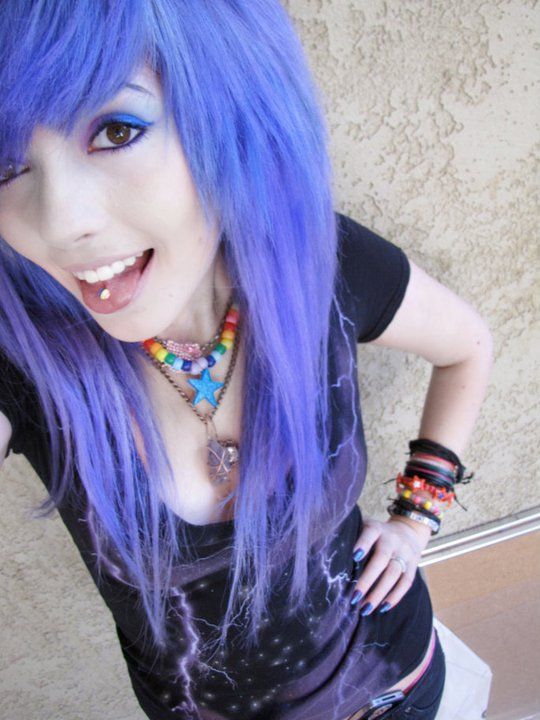
Over-accessorising did NOT mean piling on as many bracelets and necklaces as you could!!! That was more common within the raver scene kids. Many scene kids had a "signature necklace" that they wore in many of their photos. For example, Kiki Kannibal's bedazzled diamond necklace and Ambrehhh's kandi star necklace.
The whole point was to combine childish, bright, and happy things with edginess, violent graphics, and otherwise scary things.
Hair: This was the first instance of colourful, dyed hair being a staple among scenesters. Experimenting with hair colour and style was greatly encouraged and looked up to! Scene kids continued to take elements from goths and punks, teasing their hair and some even spiking it up with hair spray and hair gel to have "peacock" hair. While side parts with choppy slanted bangs were still the most popular hair style, there actually WERE middle part hairstyles, they just werent as popular due to 2000s fashion in the mainstream deeming side parts as more attractive. Blunt bangs with teased, short layers at the top with a middle part were a staple hairstyle that took more inspiration from goth hairstyles (although it was more popular within the Br00t4l scene). Straight hair was the most popular hair type, and due to the the discriminatory social standards at the time, scene kids with curly or wavy hair were considered "ugly" and were therefore not as popular. As a result, there were only a small number of POC/minority scene kids who made it to the public eye & reached "scene queen" status.
Scene kids with different hair textures DID exist though, despite the discrimination <3 ! Sadly, it takes much more digging to find them due to the fact that they were not as popular :C
Hair extensions were also common. Many scene kids with longer hair did not directly dye raccoon tails into their hair but rather dyed hair extensions to match their hair colour and put raccoon tails on those. In fact, many scene kids did NOT naturally have long hair! A lot of it was just extensions. To get that crazy layered look with that length, the majority of the real hair was teased, straightened, and hairsprayed specifically so that the extensions would seem like real hair (even tho usually the hair shades/tones did not match). Usually, these hair extensions would be tape-ins rather than clip ins, as it would be harder for them to shift while moving around.
Makeup: Experimentation was encouraged. With older scene queens/kings like Jeffree Star, Audrey Kitching, and Amor Hilton being big influences in makeup at the time, extremely thin (or even drawn-on) eyebrows, big, dark eyeshadow around the eyes faded into neon colours, fake lashes, and heavier eyeliner were common necessities to complete the look. Nude/concealer lips as well as bright pastel pink lipstick was popular in terms of lip makeup. Cakey concealer was also a thing, but who cares when you're just online or drunk at a party, amirite?
Lifestyle: Continuing onwards from early scene, scene remained mostly apolitical. Many popular scene individuals people look up to as inspiration today were extremely racist, homophobic, and/or body shamed individuals who were not at unhealthy levels of weight (many were pro-anorexia, bulimia, etc.). However, again, it must be remembered that not everyone was like this. The majority of the scene still was comprised of children who were not politically active. That being said though, the underlying ideas of experimentation, rebellion against personal grievances, and originality still remained, but were upped to about x100 of how they were originally.
In comparison to early scene, the MySpace era of scene had great emphasis on being original and NOT adhering to labels in your online presence. To be the label, you could not label yourself; it was a title earned by having others label you as scene or having your photos posted in "scene kid" compilations/albums off-platform. If you called yourself scene, people would immediately call you a poser. If you ever faked something about yourself, such as editing your photos to make your hair look fuller, removing blemishes or imperfections, or even just adding hair extensions to your hair, youDID NOTadmit to it! Hence why you see so many scene kids saying "my hair is natural" even when it is clearly not! In many "how to tease your hair" videos, scene kids deliberately already added in their extensions and half-teased their hair up to try and make it seem like their hair was real. (My hairdresser was an og scene kid, and she explained all of this to me haha). Presenting yourself as too-good-to-be-true was important.
The adoption of being rAnDum and cringe was EXTREMELY popular. Take popular scene kids at the time like Boxxy, Ambrehhh is ded (Amber Katelyn Beale), and even not as popular ones such as Ettie Isolation and KittyKat Rawr. Exaggerating everything, cracking jokes constantly, saying random things out of nowhere, and teetering on the edge of being annoying was popular. Along with how limiting some technologies (especially phones) were, in text, scene kids would use many abbreviations, text-based emojs, numbers instead of letters, and purposefully misspell words to appear quirky. (In comparison to today's scene, it was much less L33TSP34K but rather just sum rand0m numberz here n th3re XD). This in turn led to scene kids being seen as a nuisance by the general public.
Going hand in hand with the whole "being original" thing, at this point of the scene subculture's existence, it was a competition to see how involved with music you were. Gatekeeping was not uncommon, with scene kids hiding their profile songs to prevent their favourite artists and bands from being listened to by "posers" and "normies." Many scene kids also befriended both big-name music artists as well as more niche artists who later blew up. However, sadly, because of the eagerness of many children to befriend as many "niche" artists as possible, many paedophiles in that side of the music industry took advantage of such an opportunity & a lot of children were groomed by (in)famous artists associated with the scene subculture.
In terms of substance use and promiscuity, there was a rather hard line drawn. This branch of scene undeniably DOES have some sexual undertones, especially in the music and party culture that is associated with the subulture. Sexual freedom was ingrained into the culture itself, again with people "experimenting". There were a subsect of scene kids who identified as "sXe" or "straightedge", which meant that they did not partake in drinking alcohol, doing drugs, or having sex. Being straightedge was a trend for a while, but faded out of popularity. After a while, being sXe became a basis of ridicule for some scene kids & they were called "posers" and barred from some groups and party scenes.
In real life, scene kids were known to constantly buy new clothes. Overconsumption was prominent in this time, as there would be something new trending every day and many scenesters did not want to seem like posers. Many scene kids hung out at malls to socialise or hang out with friends while also shopping a bunch at places such as Hot Topic, Zumiez, and Spencers. This played into the continuation of 90s "mall rat" culture.
In general, a scene kid could be identified by their appearance, online presence, involvement in music scenes, and (perceived) originality.
EXAMPLES

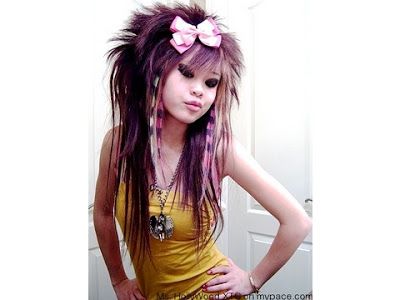
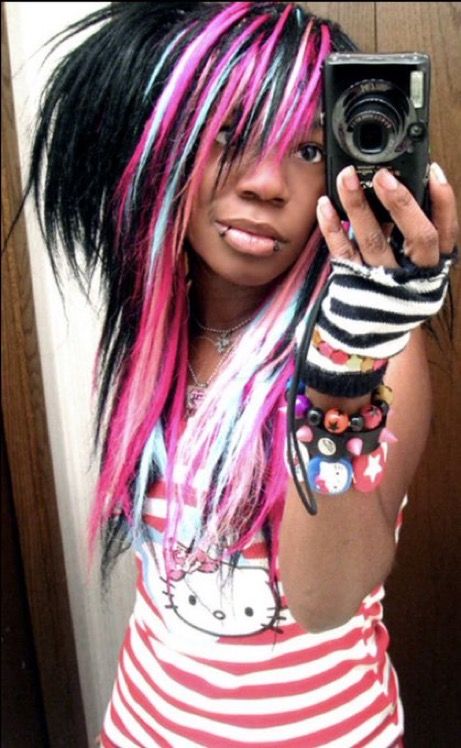
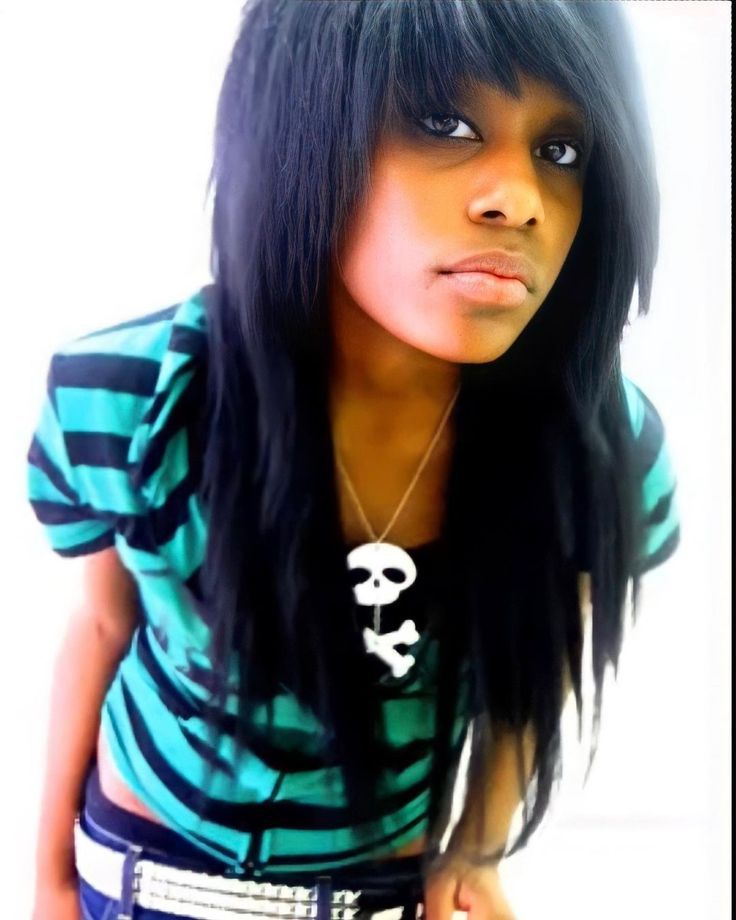
(and some non-side part scene hair)
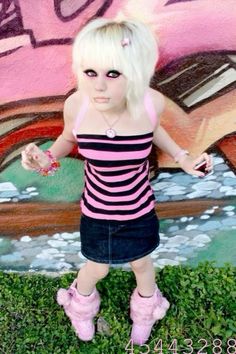

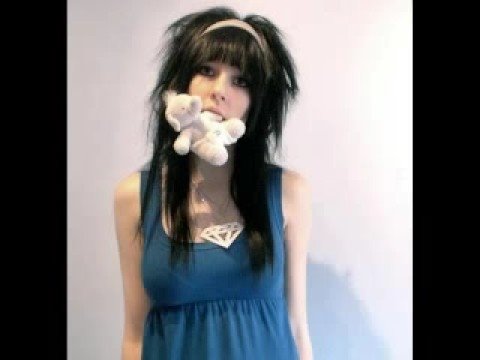
BR00TAL SCENE
Circa 2007-2010 (around the peak of MySpace a little while after the subculture became more popular.)
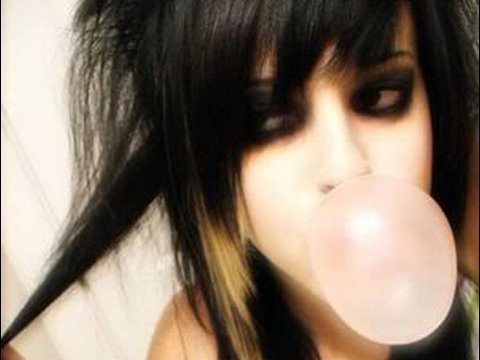
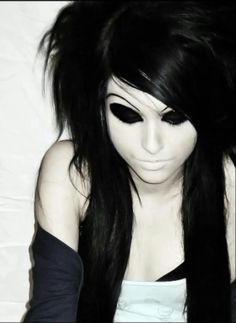
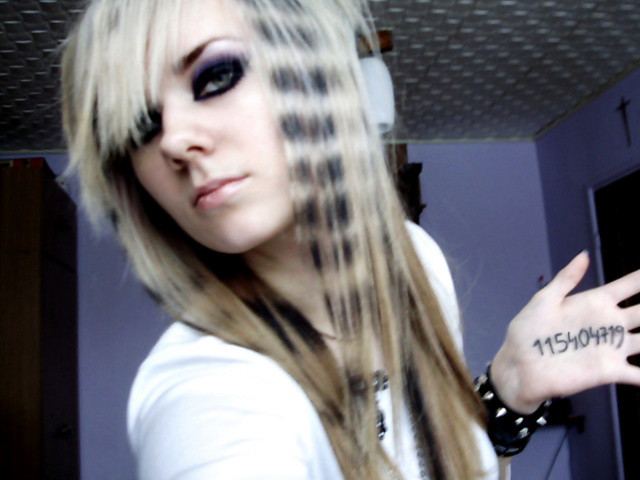
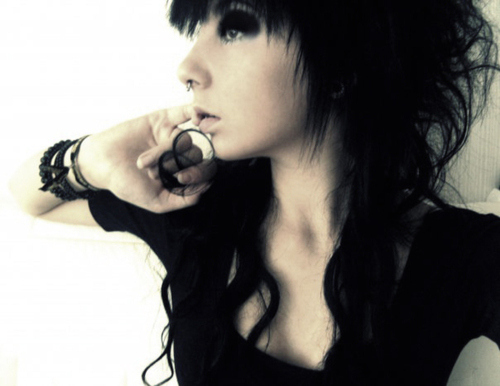
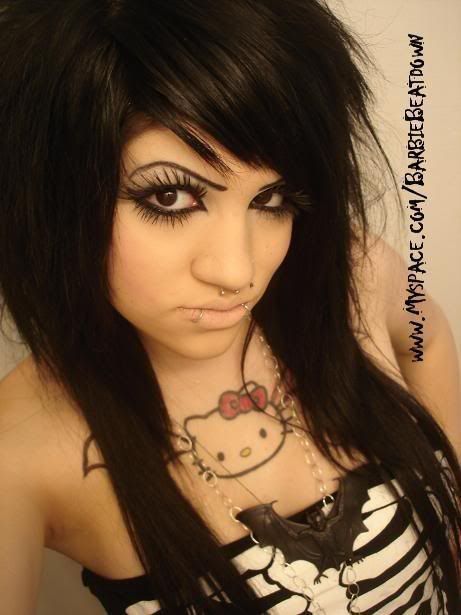
"BR00TAL", "Brootal", or Brutal scene and its associated culture is argued to be one of the most problematic sectors of the scene subculture. Many Perfection and Vanity groups (ie., Vanity is Perfection, Perfection Dolls, Aesthetic Apex) popularised this subsect of scene fashion. In comparison to other substyles, brootal scene is much edgier, focused on mysteriousness, and has more violent/weapon imagery.
The average MySpace user in the height of the brootal fashion would commonly confuse brootal scene kids with emos, leading to the notion that scene kids were "poser emos". Brootal scene kids had a lot of overlap in terms of music taste withmallemos (not og emos) and some metalheads, as again, they leaned to a more edgy and aggressive side.
Associated Music Genres: Deathcore, death metal, cybergrind, death metal, post-hardcore, screamo
Some Artists: Chiodos, Paramore, Decapitated, My Chemical Romance, Gojira, Pierce the Veil, Avenge Sevenfold, Senses Fail, Thursday, Sum 41, The All-American Rejects, Broken Torso, Papa Roach, Nile, Immolation, Napalm Death, and any super underground niche bands.the whole point was to find bands that others didnt know and gatekeep them.
Clothes: NO colours, or if present, kept to a minimum. It's like the inverse of stereotypical "HxC" scene-rather than have majority bright colours with pops of black, brootal scene is more characterised by desaturated black and white with optional pops of colour. Skintight clothing was still the goal. In terms of shoes, black and white converse (both high-top and knee high), ballet flats, normal flats, and vans were popular. Some older brootal scene queens and richer scene kids had Demonias, but NOT the knee high ones with the straps!!! It's a common misconception. Older Demonia shoes, such as fluffy knee-high ones, sleek, thick-soled mary janes, and platform sneakers were among some of the uncommon shoes.
Weapon imagery was popularised by this substyle. Brass knuckle necklaces and belts, razor hairclips and necklaces, clothes made of fabric with guns printed on them, etc. were all popular in this substyle. Blinged-out, silver jewellery was also a common accessory. Brootal scene kids would usually be models for edgier clothing brands. It wasn't uncommon for many brootal scene kids to have a ton of clothes sent by PR groups so they could get photos for their products.
Tiaras, ear stretching, and piercings were also a big trend in this substyle. Some people even said that if you did not have piercings or body modifications, you were a poser. Snakebites and septum piercings were among some of the more common piercings brootal scene kids had.
Hair: Most brootal scene kids had either black or blonde hair, keeping up the desaturated shtick. Of course, many had the same razor-cut, side-slanted bangs. Blunt middle part bangs with short, teased layers on the side were much more common in the brootal scene than in other substyles (it is more akin to the "bat's nest" goth hair style, except without as much length at the top and less teased/gnarly). In comparison to other substyles, the bangs hang much closer to and sometimes hide the eyes. Hair extensions are a bit easier to blend into the hair for this substyle due to hair usually being one colour or just one colour with a little bit of colour at the front or tips.
Makeup: Heavy black eyeliner and mascara characterised this substyle. Usually accompanied by a concealer lip. Raccoon and panda eyeliner/eye makeup was common as well. The goal for many brootal scenesters was to look as pale as possible, so concealer that was shades lighter than their true skin colour was often used in excess on their skin, leading to an extremely cakey look irl. EXTREMELY thin, black eyebrows were a tell-tale sign of a brootal scene kid. Usually, they were drawn on.
Lifestyle: As stated above, the OG brootal scene was extremely toxic and is usually regarded as the most problematic side of scene.Some people on modern socials have attempted to revive brootal scene but in a less toxic and more inclusive way. For the purpose of this blog, I will recap the culture of 2000s brootal scene kids as well as the overarching non-problematic values that modern-day (and less popular/shunned OG) scenesters have central to this subsect.In the height of MySpace, brootal scene kids were among some of the most popular recruits for perfection/vanity groups and trains, or the most "perfect"/"beautiful" scene kids. Pale skin, slender (even unhealthily underweight) bodies, straight hair, and smooth skin was the beauty standard (which WAS harmful on multiple levels!!). OG perfection groups were a breeding ground for jealousy, toxicity, and hatred. Many POC scene kids were barred from these groups for their hair type & skin colour, and people who were even at a healthy weight but didnt have a slender figure were deemed posers. There was constant drama between perfection groups, infighting within groups with people accusing others of copying their style, and in general, it was a toxic mess. Paedophiles were also present in perfection groups (and some were even the owners of those groups/trains), so grooming was sadly a common occurrence within this subsect.
That being said, brootal scene kids tended to be much more on the reserved side when it came to public social media presence, nor would they label themselves as "brootal" for the sake of not being called a poser. Compared to their more colourful "hxc" counterparts who chronicled a lot of their lives on YouTube and Stickam, brootal scene kids tended to stay in smaller cliques and limit a lot of their personal posting to bulletins rather than to the whole world. (Of course, there are exceptions to that, w people like Hannie Dropkick, but it's much tougher to find personal media such as random videos or non-photoshoot posts from brootal scene kids.) There are a few "brootal" scenesters who have gotten into big MySpace dramas or have had video responses made to their posts on YouTube, but you won't really find anything firsthand from them that doesn't paint them in a "perfect" light.
Brootal scene kids were known to be more rebellious against parents & served as the "girl your mom warned you about" kinda people that girls would look up to. Many would never interact with randos or normies online, yet still amass a large following on MySpace. The goal was to be as mysterious as possible, while also maintaining a "perfect" outward appearance. Airbrushing the heck out of photos to make skin look smooth, editing out birthmarks and blemishes, and photoshopping hair to make it different colours or have more volume was extremely popular among scene kids in this substyle. However, they would NEVER admit to it, claiming it was how they looked naturally.
Overall, brootal scene embraced an over-confident and "effortlessly perfect" mindset. Nobody could tell them what to do and online, they pretended the world revolved only around them.
EXAMPLES:


RAVER SCENE
Circa 2007-2012 (height of the subculture to MySpace shutdown)
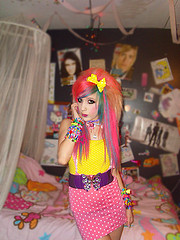
Raver scene was the most inclusive of the substyles due to its overlap with rave culture, specifically kandi raver and PLUR culture. In comparison to preceding substyles, DIY was more emphasised in raver scene fashion, but not from a sustainability standpoint, but rather from a standpoint of scene rave clothes not being produced.
Because raver scene was more prominent atRAVESwhich tended to get hot, raver scenesters dressed in a more revealing fashion and in general, showed a lot of skin. Also, because of raver scene being a fashion that was inspired by kandi ravers, the majority of raver scene kids were on the older end (16-18+) as they could go to clubs and raves legally.Of course, younger kids would find ways to fake IDs or sneak in, but raver scene kids were predominantly much older than the tweens/early teens that characterised the rest of scene at this time.
Associated Music Genres: Happy hardcore, Handz Up!/dancecore, house, nightcore remixes of songs, early dubstep, trance, eurodance, and mainstream EDM DJs
Some Artists: Tiesto, Rusko, S3RL, Alice Deejay, Gigi D'Agostino, Basshunter, East Clubbers, Avicii, Rocco, DJ Splash, Cascada, DJ Trashy, Darude, Skrillex, Swedish House Mafia, DJ Satomi, Manian, Disko Warp, ItaloBrothers.
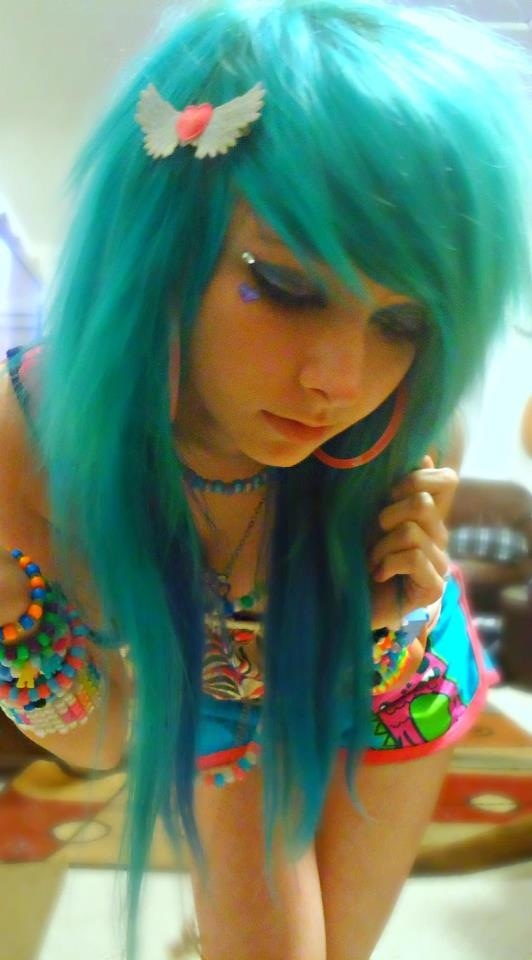
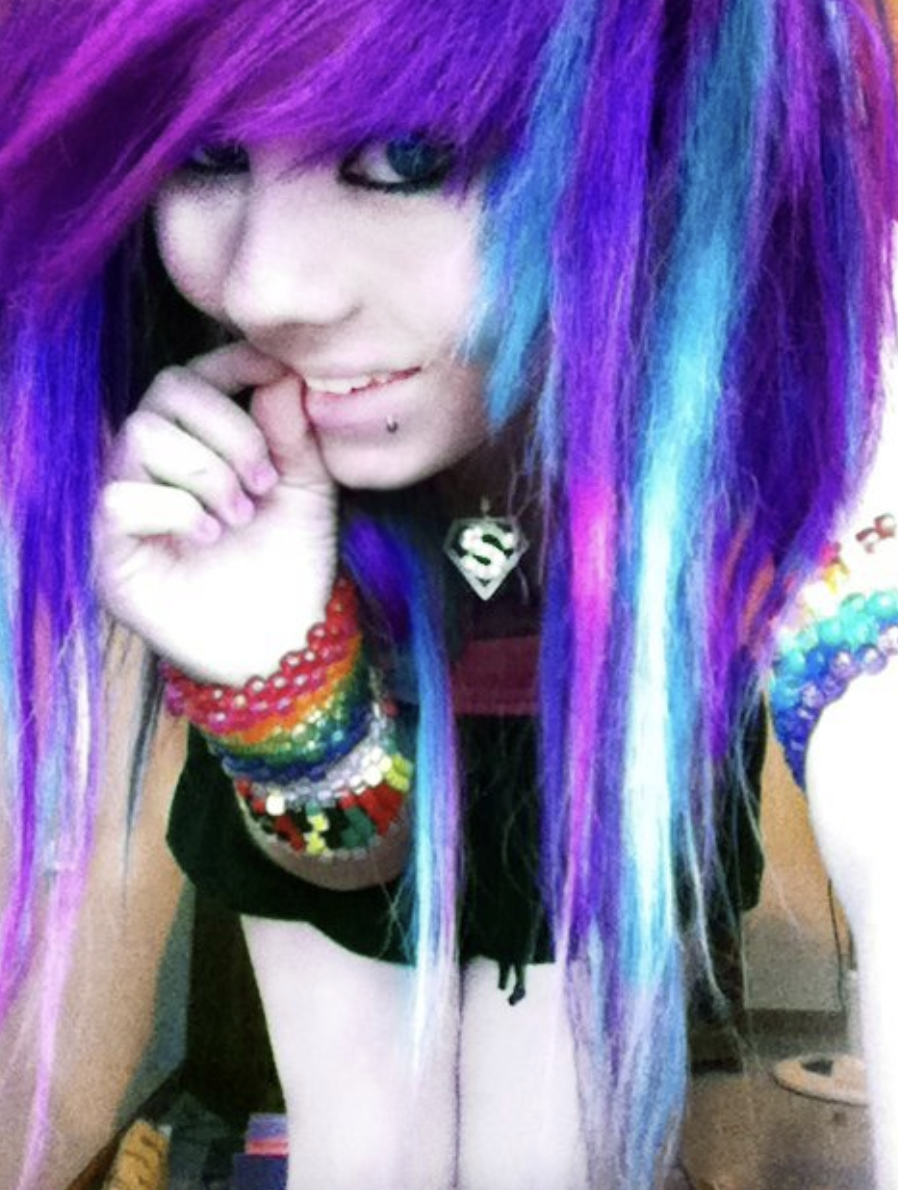
Clothes: Bright clothes; barely any black was present, and if so, it was used as an accent; white was a more common accent colour used to make outfits look less overstimulating. Clashing colours and mismatched prints were common. As mentioned above, a lot of raver scene clothes were revealing due to influences of rave fashion and simply how the venues were PHYSICALLY, and required clothes to keep ravers cool.
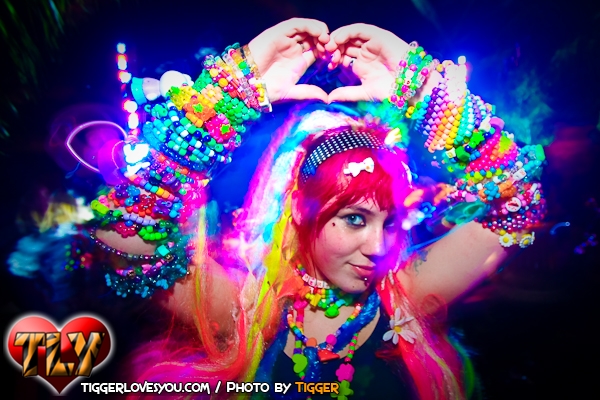
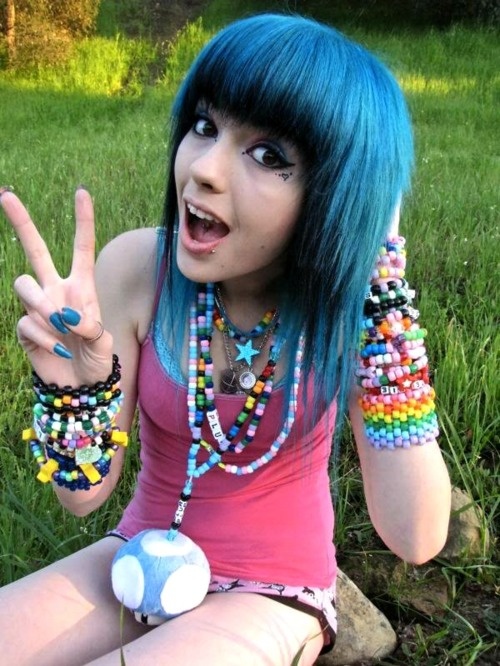
Overaccessorising on the legs, arms, and neck were common. Since raver scene took influence from kandi ravers, kandi and plastic jewellery was a BIG part of this fashion. Larger, not-for-trade pieces such as cuffs would go higher on the arms, whereas kandi singles would be closer to the hand so they could be traded. Fluffy leg warmers and neon fishnets were some common leg accessories. However, accesorising was not to the extent of today's scenecoresubculture, which a lot of people tend to get wrong. While there was a lot of kandi involved, that was not the main charm of an outfit. A lot of clothes were DIYed and one of a kind w/ similarly bright, white accents. Hand painted and dyed bras and tops out of old tights were common.
Hair: Of course, once again, the choppy bangs that characterise the overall scene subculture were a glaring sign that someone was a raver scene kid and not just a casual ravegoer. SUPER bright hair of all sorts of mismatched colours was popular as well. Of course, teasing hair up and putting in hair extensions were popular, but due to all the dancing and jumping around that came with going to raves, hair would be sprayed STIFF. Either that, or hair was not teased at all. Clip-in extensions were extremely unpopular as again, they could get displaced really easily. Tape-ins were much better for adding length while simultaneously not getting displaced. Raccoon tail and patterned extensions were not very popular. Shorter, extremely layered scene "mullets" (sometimes with blunt bangs) were also popular in this substyle, as they were easier to maintain.
Makeup: Thick, rimmed black eyeliner paired with neon eyeshadows were popular. Or, if not a thick rim, then simply lining the eye with black eyeliner (including the waterline). Hot pink lipstick was pretty common. Fake lashes werent as popular; mascara was enough.
Lifestyle: As said in the name, raver scene kids went to parties andRAVES!!!! Like a LOT! Whether it was legally or illegally I cant say. Raver scene was like an amalgamation of kandi raver, PLUR, and scene ideals. ie, don't be afraid to experiment with your style and body, but also be respectful towards others while doing so. The whole "respect" part was not necessarily followed by other substyles, which made a lot of the general public think that scene kids were annoying, overly-dramatic teenagers who pretended to be something they were not for attention. Many scene queens who were raver scene kids were extremely nice and helpful to others.
However, this did not stop people from grooming them, hurting them, or otherwise making their lives miserable. Raver scene kids were still deemed as annoying scene kids and would have their private lives put on blast on the internet by people who hated them.
Because many came from tumultuous backgrounds or had a rough childhood, many were isolated from their families and friends or chose to be more independent. Online, they would post extremely positively and help everybody out and serve as an "inspiration" for people who were struggling with similar things. One continuity from other scene substyles that was present in raver scene was gatekeeping of music and raves. A lot of raver scene-exclusive raves were passed on by word of mouth rather than advertised online as big events. Similar to hxc scene, raver scene kids would attempt to befriend DJs and some even went on to produce their own music and visuals for raves. Substance use (hard drugs included) and alcohol were prevalent, of course, because of their presence in the overall rave scene. Sadly there were numerous raver scene kids who have died of ODing or from using laced drugs.
Straightedge (or "sober raving" rather than sXe, as this substyle was not as punk influenced) culture was another big thing in raver scene. While of course, some of the general public at raves was not very fond of straightedge individuals (many people considered them insufferable, "holier-than-thou" or just not "fun"), among raver scene kids, it was not really something that was judged. You chose how to explore yourself. if that meant keeping yourself healthy and making decisions to not use substances or have sex, that was your thing and nobody had the right to judge you for it, as long as you weren't bashing on others for doing the opposite.
Overall, raver scene kids were extremely optimistic, positive, and tried to shroud any sadness or insecurities they felt. They always tried to make friends, and many could be categorised as "people pleasers." LGBTQ+ individuals and people of colour/minorities were more tolerated in this sphere than in other subsects of scene. Of course, nobody labelled themselves as scene still (because it was inherently poserish).
EXAMPLES:


Circa 2009-2014 (before the death of MySpace, continued onward into the heyday of FaceBook and the era of dank YouTube/Vine memes.)
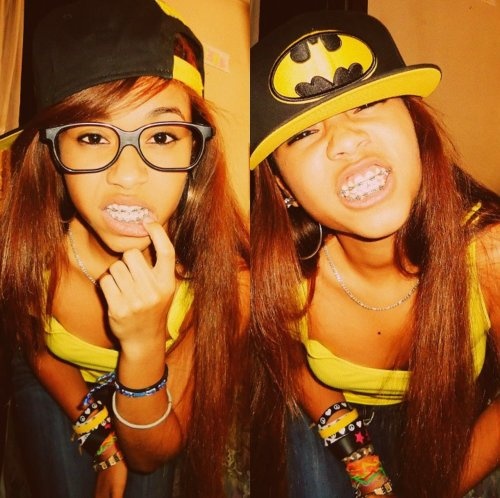
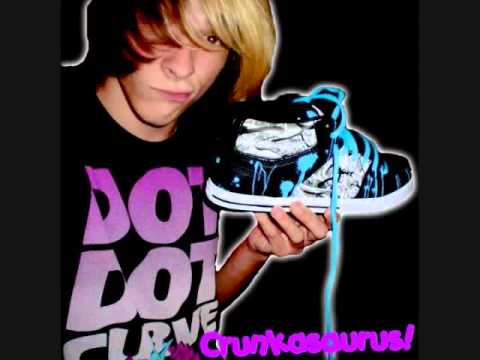
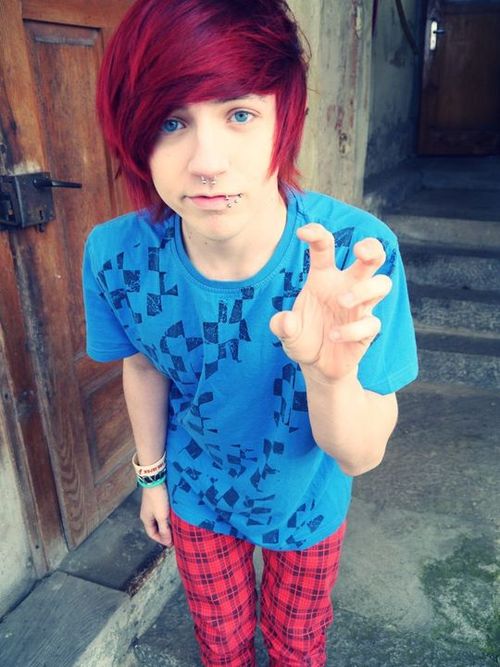
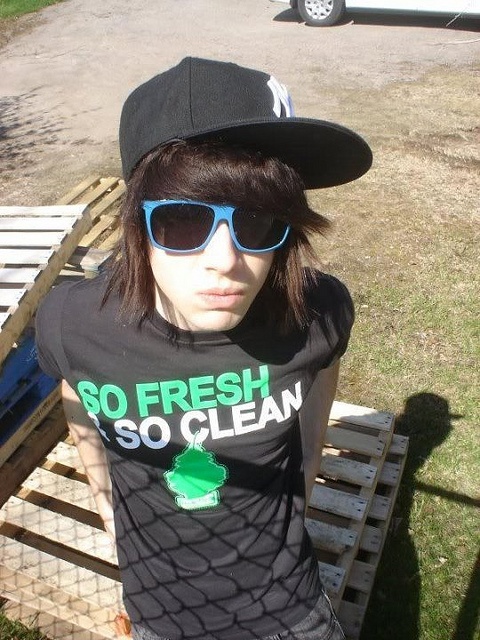
Swag style was its own independent style that followed the big fashion trends in the early 2000s, originating in California as a streetwear movement. Older and younger scenesters immediately jumped on this trend, as it was the perfect complement to the original HxC scene--it continued to have big, bold graphics and cringey adages printed on tees and accessories, but designs were not as complicated as in HxC scene.
This marked the beginning of the death of the scene subculture. MySpace shut down in the midst of this era, and many people dispersed to a variety of other platforms. Scene kids as a whole community were not as tight-knit as they were on MySpace, as now, the internet was more accessible to others. Scene style was going out of fashion.
In comparison to other substyles, swag scene drew great influence from African American culture in terms of both fashion and music taste.
Associated Music Genres:Rap, Hip-Hop, Pop, Dubstep, "Meme" music, Crunkcore
Some Artists: New Boy'z, Skrillex, Chris Brown, Wiz Khalifa, Soulja Boy, DotEXE, Waka Flocka Flame, LMFAO, Pitbull, Cobra Starship, Shaggy, Cali Swag District, T-Pain
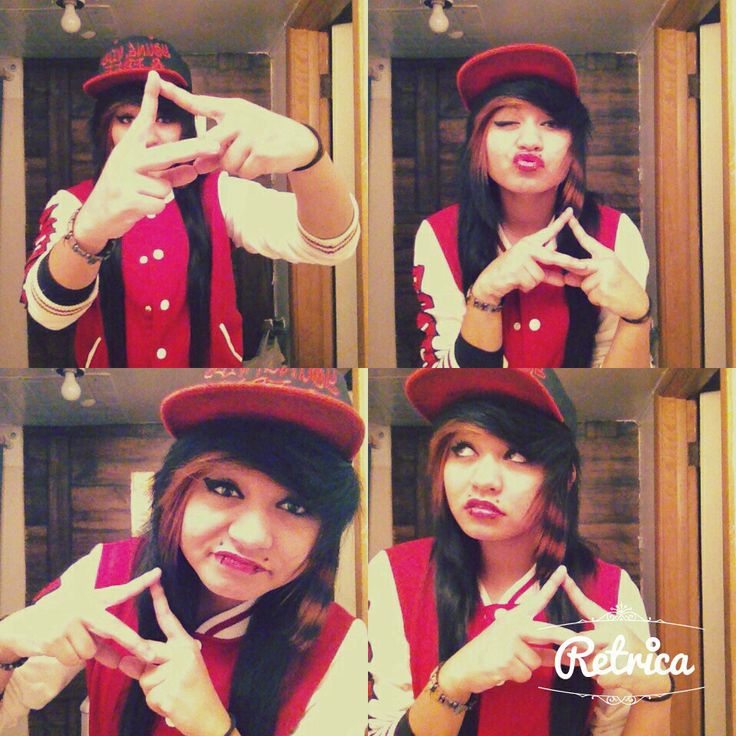
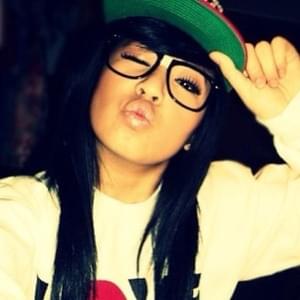
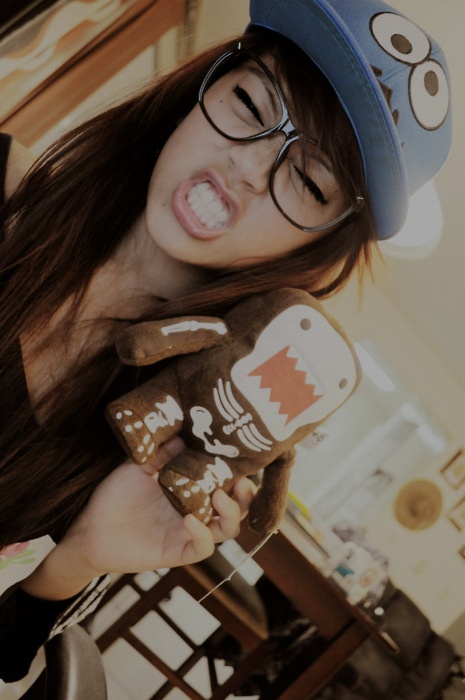
Clothes: Tight-fitting graphic tees with cringey sayings, mustaches, or big, impact-font text. No intricate graphics. Usually a solid colour with black or white text. Usually paired with skinny jeans or printed leggings, and high tops. Snapback hats were a NECESSITY! Shutter shades were a common accessory, along with tons of thick rubber bracelets. I <3 boobies bracelets and "haters <3 me" hats were SUPER in at this time.Brands like Supreme and Obey were popular. Accessories usually had motifs of hearts, mustaches, and dots. In general, popular skatewear and West American street fashion was common among swag scenesters. Usually, tees would be paired with a solid-colour zip-up hoodie. Vans, Jordans, and Converse were still among some of the more popular footwear. Wedge sneakers too. Glasses with the lenses removed were popular. Domo Kun became popular around this time and was common to see on shirts, necklaces, hats, and random little trinkets. Hello Kitty and the Cookie Monster also had a resurgence as popular characters on clothes at this time in the scene sphere.
Hair: Sideswept hair was more common at this point than the choppy-banged look. Hair was not as layered and was kept longer and was not teased completely, as it would be hidden by snapbacks most of the time. The side part was crucial to this to pull off the scene kid aspect of it. Blunt bangs were not popular in this style, as it would not make you differentiable from the rest of the swag style as a swagscene kid. You'd just be "swag." Hair extensions were not as common in this style because it would make you seem "fake" (and everyone knew of their use now), but raccoon tails would be dyed directly INTO the natural hair. Bright coloured hair and natural hair were both fine. There wasn't any preference.
Makeup: Thin, black eyeliner rimming the eyes (emphasising the lower waterline), chunky mascara, and cakey orange-tinted concealer was popular at this time. (This is the era of the extreme tans; up until now, being as pale as you could be was popular, but times were changing both literally and socially). The eyeliner was a big part of it, as in normal swag fashion, eyeliner was present but not AS heavy.
Lifestyle: As stated above, swag scene fashion took significant influences from POC Americans and Latino & African American culture. While a lot of people simply partook in the fashion because it was trendy and it DID have overall positive influence on the acceptance of POC individuals into American society & finding a common ground between people of different races and cultures, there was a LOT of cultural appropriation with hairstyles, dialect, and other aspects that I am not as well-versed in.I won't be going as deep into that aspect since I do not know much about it, but do know that some aspects of the overall swag style were appropriated from black and Latino culture, and people frown upon it today.
However, from the standpoint of the swag scene substyle, the integration of fashion from different cultures allowed minorities to partake in the subculture at a level they had not before. There was a boom in Latino, Asian, and Black scene kids simply because they were more welcome. (At this point in time, being a part of the LGBTQ+ was still looked down upon in overall society at the time, so that is why raver scene is considered more inclusive than swag scene).
Memes, being cringe, and doing crazy stunts was a core part of the lifestyle. #YOLO! From a scene standpoint, the whole point was to party, party, party. Make friends, skate, try a new hobby. Go rock climbing. Be daring. Be silly, be cringe, be whatever the FUCK you want to be (swearing was a big part of it too). In combination with the already cringe and adrenaline-hunty nature of the swag movement, the whole "be cringe, be free" aspect of scene was magnified by x100.
At this point, the scene label was dying. OG scene queens were not as popular anymore and seen as attention-seeking for trying to relive the past. Many of them also grew up, you know! It had been more than ten years since the inception of the subculture. However, the scene was still alive, but not at the level to which it had been earlier. It went from a contest to see who was more unique and rANDuM and cool to simply just going out and trying something new and acting hip.
Overall, swag scene kids were extremely positive and confident (not like. the fake over-confidence that br00tal scene kids had. it was more of an acknowledgement that you were happy in your skin and owned your style). A lot of swag scene kids have been described as having their heads in the clouds and being too risky.
EXAMPLES:
INDIE SCENE
Circa 2012-2016 (post-MySpace, death of the og scene subculture)
also known as "Hipster" scene, but Indie Scene was the term that was most commonly used.
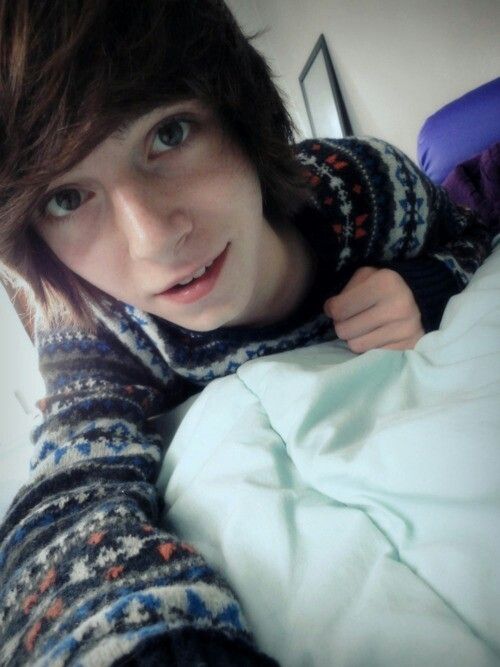
MySpace was long gone at this point and the scene label had died with the popularisation of other styles. 2000s fashion trends fell out of style. However, on Tumblr, older scene queens and younger children interested in scene revived it, but without as much edge and without the label. This was in the age of the whole "smol bean", galaxy + pastel colour rage, as well as a separate explosion in fashion such as plaid tops paired with skinny jeans that people now associate with the millenial generation as a whole. People on YouTube called this temporary resurgence "Indie scene," as it was much more muted than its predecessors.
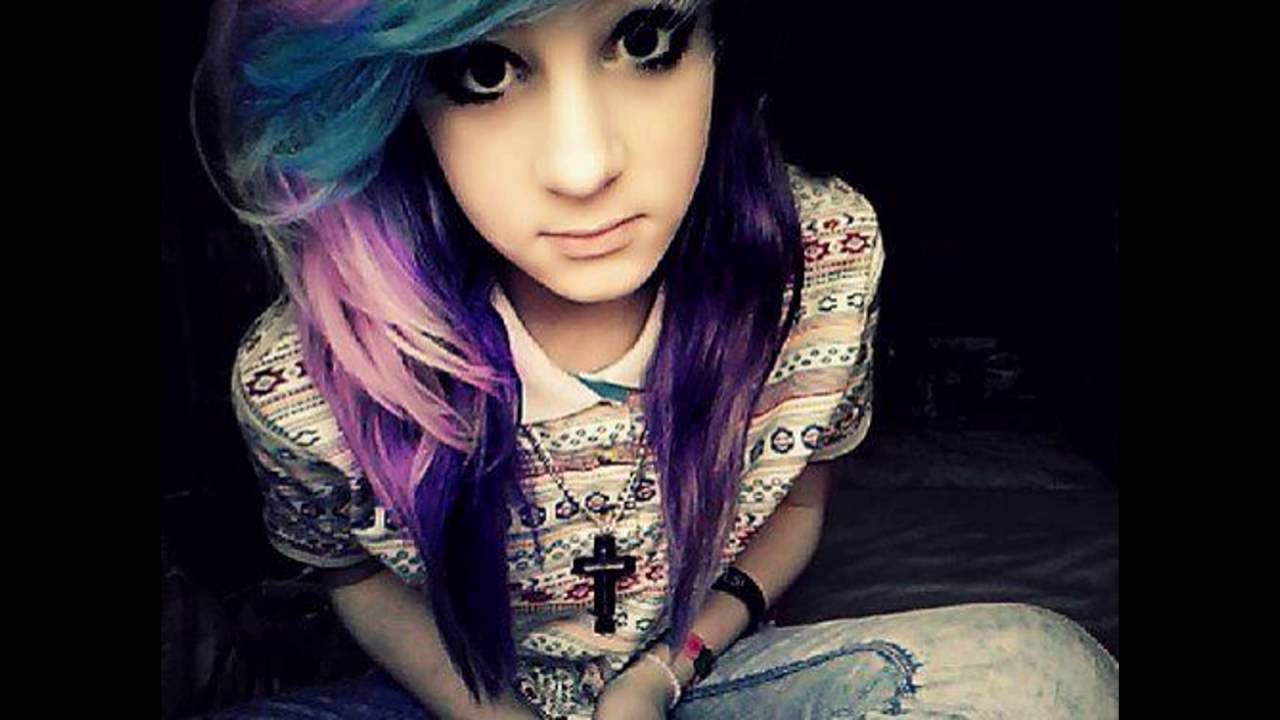
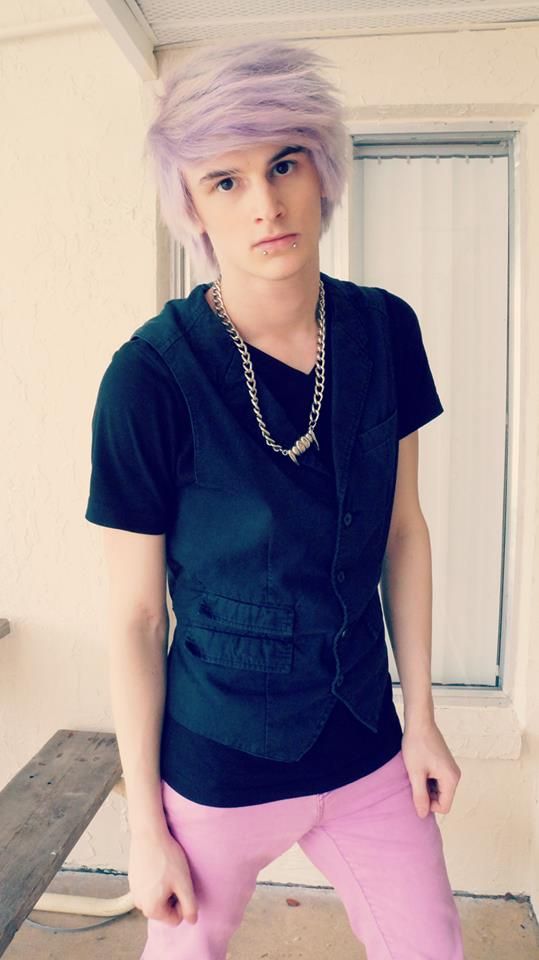
There are two fashion types associated with Indie scene: Pastel Indie scene ("Tumblr" scene) and Indie scene. Because these two styles developed simultaneously, a lot of people group em together.
A lot of your favourite 2010s streamers and gamers WERE a part of this substyle! However, at this point, scene was no longer a big label. It was just kind of a "if you look like it, you are" kinda thing. Leda Monster Bunny, Tabs24x7, and DanTDM are all some examples of popular individuals who had this style!
In comparison to all of the other substyles, hair was MUCH longer, not as brightly coloured, and did NOT have super choppy layers! Instead, there was an emphasis on the natural.
Associated Music Genres: Indie rock, alt-pop, stereotypical "mall emo" music, alternative rock, 2000s "bedroom pop", brostep + glitch hop (moreso listened to by indie scene YouTubers), indie folk, americana, folk rock, boom-clap. In general, music you'd hear on the radio a lot.
Some Artists: The Lumineers, Arctic Monkeys, blink-182, Green Day, Marina/Marina and the Diamonds, Andy Grammer, TheFatRat, Skrillex, Two Door Cinema Club, Paramore, Nirvana, Silverstein, Mumford and Sons, OneRepublic, Imagine Dragons
its a mishmash of music popular at the time as well as certain older mall-emo associated bands. Also depended on what platform you were looking. YouTube had more EDM, Tumblr had softer music, and FaceBook had more of the boom-clap/mall emo.
Clothes: Depending on which sector of Indie scene you were in, it differed. Piercings were common in both, but sparingly. Septum piercings, tongue piercings, and snakebites were the three most common piercings. Ear stretching was also common, even to REALLY high mm gauges. (the majority of indie scenesters didnt go past 10mm, but some indie scene ppl had more extreme body mods)
Pastel Indie Scene: Pastel clothes, muted colours, gray, white and black. Vibrancy was pretty much void, unless you were Leda Monster Bunny on good occasions. Lots of galaxy print, cute graphics, and overall a very "kawaii" vibe. Think "smol bean" kinda art style and graphics. Sometimes animal ear headbands and face masks would be worn, but never IRL. Just for photoshoots. Tattoo chokers/bracelets were in style. Flower crowns, beanies, cosmic imagery on clothes and necklaces (moons, stars, constellations), and "healing" crystals were also popular accessories. Think pastel 2010s Tumblr vibe. Kandi was still a thing, but it was worn extremely sparingly. Maybe one necklace or a single on an arm. If you were feeling lazy, a simple black cami top or shirt would do.
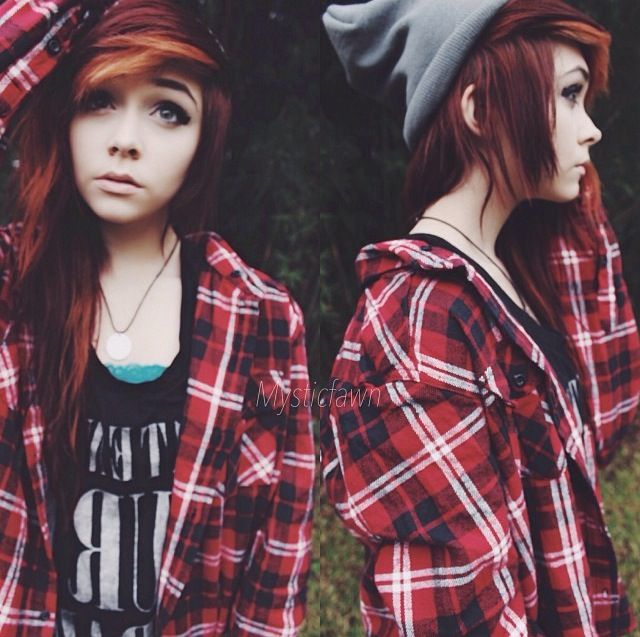
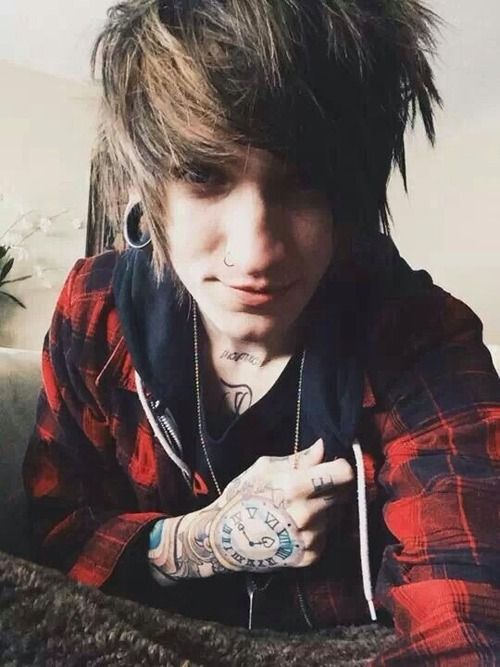
Indie Scene: Plaid. So much plaid would be seeing squares all day. Plaid overcoats, shirts, sweaters. Usually paired with a white, cream, or black undershirt and some skinny blue jeans. Think of the typical "millenialcore" fashion today. Very outdoorsy looking and laid back. Usually also with some Vans or red, blue or black converse high-tops. Bandanas were a common accessory, either tied around the neck, head, or arm. Beanies were also a staple of this fashion. Thick-rimmed hipster glasses were also a common accessory, even worn by people who did not have prescriptions (this was a remnant of the swag era). A lot of Indigenous tribal-patterned articles associated with Boho fashion were popular as outerwear or belts. Rubber bracelets could be seen, but seldomly, as woven and paracord bracelets were more popular. Overall, there was an outdoorsy and natural feel to Indie scene style.
Hair: Long hair was the sign that somebody was an Indie scenester. In comparison to earlier subcultures, length all around the head was valued. Choppiness was not stylish anymore. Razor-cut bangs were not as popular, nor were uber straight hair extensions and raccoon tails. There was an emphasis on natural hair length and growth. While there were shorter layers at the top, they were NOT teased to the moon, nor were they short enough to where peacock hair or spikes could be done. Iif it laid flat, it would completely cover the face due to its length. Wavy hair was the rage in mainstream fashion, so rather than straigten the heck out of it, the bottom of hair would be heat-treated with a curler to make waves into it. The shorter layers at the top were completely swept to the side and fixed with a curling iron and hairspray. The side part was VERY prominent, and it was at a greater angle than prior scene hair styles for maximal volume over the face. Bright hair colours were not popular, with natural hair (brown, black, blonde) and pastel colours being the face of this era. Pastels were more common on the Tumblr/pastel indie side, whereas normal Indie scenesters left their hair undyed or dyed it natural colours.
Makeup: Black eyeliner was still a indicator that someone was scene, but it was definitely not as heavy as in prior eras of the subculture. Instead of a complete rim around the eye, the top eyelids were more heavily lined than the bottom waterline. Raccoon eyes were out of style. Guys didn't really wear eyeliner anymore, and if they did, it was worn sparingly. Indie scene kids wore black eyeliner with chunky mascara, usually pairing it with either natural eyeshadows (brown, skin-toned, or other tan shades) or metallic earthy colours (navy blue, green, red). Pastel indie scene girls would wear pastel eyeshadow to contrast the eyeliner. Concealer lip became popular once more.
Lifestyle: By this point, MySpace was gone, and as mentioned, scene kids usually flocked to either Tumblr, FaceBook, or YouTube. Lifestyle varied between Indie and Pastel Indie scene.
Indie Scene: FaceBook scenesters were more akin to the stereotypical "millenialcore" behaviour & focused more on nature and preservation. Going out to hike, climb, do sports, etc. was a much more common pastime for this group of scenesters. Rather than be outlandishly cringe, many Indie scene kids took up a spunky and sweet personality. There was a lot of inspiration from hospitality culture from the American south (ie, TX, New Mexico, Arizona). Taking care of animals & advocating for animal rights were also common beliefs that were held by a lot of Indie scenesters, as a lot of them lived on ranches or in wooded areas with a lot of wildlife.
Pastel Indie Scene: Streaming/gaming was becoming increasingly popular in the YouTube sphere, and you'll see that a lot of your favourite streamers had a pastel indie scene phase (ie, DanTDM). At this point in time, girl gamers and streamers were not as popular and were ridiculed for partaking in a thing that was for "boys", so many YouTuber scene girls destroyed that stereotype and grew a pretty sizeable fanbase that many young girls could look up to (a notable example is ldshadowlady)! while they still rocked the more colourful pastel scene look, they also were a bit more bubbly online, both as an homage to past scene stereotypes as well to cultivate a fanbase.
On Tumblr, people would post aesthetic photos and art, delving into a more visual-artsy side than in previous substyles. Nerdy interests were also encouraged, spanning anywhere from LARp-ing (live action roleplaying) and going to ren faires, going to anime conventions, or being obsessed with Harry Potter and Pokémon. Anime and Vocaloids also began to become more popular within internet communities (at this time, it still was considered a "cringe" thing though, so keep that in mind).
Many Pastel Indie scenesters were actively involved with non-Abrahamic religions and were religiously tolerant towards others. Many pastel indie scenesters dabbled in witchcraft and the "occult," meditated, or practised religions that were otherwise unconventional to the general USA public. (Some notable religions include Wicca, Buddhism, Taoism, and lesser-known pagan religions)
Being kind and sending good vibes while having a bit of edginess was the goal. However, even though a lot of the people in both spheres of Indie Scene were role models for a lot of children and well-respected online, many people still ridiculed them. This overall led to the death of the original scene subculture, which many people agree was marked by ledamonsterbunny's departure from the internet after numerous hate campaigns against her.
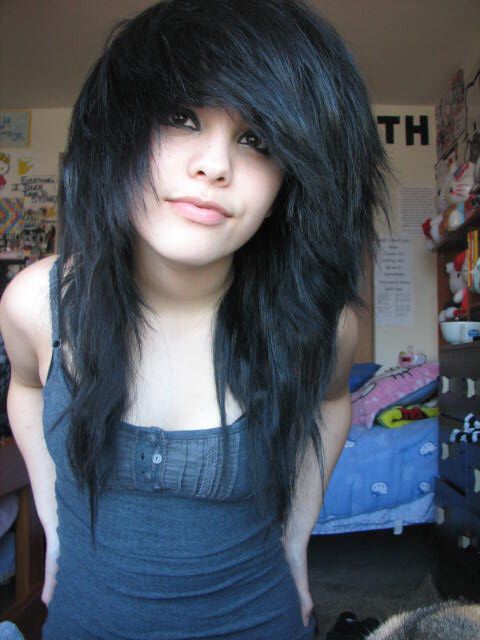
EXAMPLES:
INDIE SCENE

PASTEL INDIE SCENE
DanTDM was a scenemo kid!
Leda was considered the last true scene queen. Her departure from the internet marked the death of the og subculture.
Thanks for reading this blog! I'll be going on a deep dive on each of these separate substyles soon (as well as rawring 20s scene), so keep yer eyes peeled! :^)
feel free to drop your opinions in the comments, or if theres another substyle you want me to cover, lmk!
Comments
Displaying 13 of 13 comments ( View all | Add Comment )
N!c0 N1L ♪♡ [glmrklldUS!]
idk how im so late to this blog omg this is so good!!!!!!!!!
Lex Laceration
this is a really well researched blog + it's super accurate! but the green and white text is almost impossible to read against the grey background ://
just smth to consider in the future! can't wait to read more :))))
Omg I just noticed that on mobile the background doesn’t work :/ I’m fixing it; I didn’t know that the code for blogs is different on mobile T_T
by Sol Syanide™ [Æ] [13]; ; Report
okay it should be more legible now! I completely didn’t realise that on mobile it wasn’t a black background!! T_T
by Sol Syanide™ [Æ] [13]; ; Report
luke sameblood
this is so well researched and written!!!! i absolutly loved reading it, hope it reaches out to more people!! ৻( •̀ ᗜ •́ ৻)
Rusty
hell yeah!!!! ton of kudos for this ^__^
NotHadi
Man this must've taken a while to write 😭
Your dedication is very admirable though!!!
yeah xDD it took me about 2 months!! T_T
by Sol Syanide™ [Æ] [13]; ; Report
Two months well spent!
by NotHadi; ; Report
☆•°𝒯𝓇𝒶𝓈𝒽°•☆
Its amazing ! :P it'll help me a lot 2 define my style tysm xx
S4amm7 S1aught3r!
This whole blog is amazing and super duper helpful! I would say I'm somewhere around the swag scene? But I listen and associate to like the hxc scene
Zack Sakrilege
Thanks for the read!
Lalaa_x3
omg thats amazing X0 it must have taken forever to do this omg, im definitelly gonna finish reading after school ToT 🙏