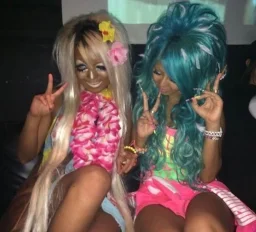


Introduction:
Visual-kei is a japanese subculture, movement and category of musicians that have a strong focus on flashy stage costumes and has been popular since the 1980's. The artists have elaborate makeup, big hairstyles and luxurious costumes. SHOXX magazine in 1992 was the first media who used the term "visual-kei," but this term has its' origin from one of X JAPAN's album's ("BLUE BLOOD") slogan: "Psychedelic Violence Crime Of Visual Shock." The founder of SHOXX magazine was a huge fan of JAPAN X, and one of the reasons he published SHOXX magazine is because he wanted to know more about such bands. Before the term "visual shock" was used and even after the term "make-up bands" was "okeshou kei" (make-up style). Koji Deijima of Bounce wrote that visual kei is not a specific sound, but rather it revolves around the creation of a band's unique worldview and/or through stylistic beauty through visual expressions in the form of makeup and fashion. although visual-kei can be of any music genre, it originated with bands inspired by glam rock, heavy metal, punk rock and gothic rock.
The history
Vkei has its' origin among a visual boom mid-70's; popular male idol Sawada Kenji showed a glam-rock influenced visual, which inspired many at that time, and the band NOVELA shared a beyond-visual appearance. Around the early 1980's, the term "visual" spread nationally. Later in the mid-80's, many bands such as seikima-II, X JAPAN, D'ERLANGER, BUCK-TICK, KAMAITACHI and COLOR were born. Inspired by the punk, glam metal, and gothic-rock scene and movements, and seen as the first bands who put emphasis on shocking visuals of visual-kei, often done through flashy stage performances, glamorous hair and eccentric clothing, traits that would later on become pillars of the movement.
The musical peculiarities of Visual Kei in the '90s have been defined by popular bands LUNA SEA (initially produced by X JAPAN's leader YOSHIKI) and Kuroyume. While LUNA SEA had a melodic and gentle approach in their music, Kuroyume were known for their aggressive and punk-like music. This was when, in 1990, the first visual-kei only music magazine SHOXX was launched. The 1990s was also when Glay, L'arc-en-ciel and Malice Mizer first saw success.
The mid-90's was considered the band boom period. Indie labels like FREE-WILL, its' subsidiaries and other artists started receiving mainstream attention, and most prominent bands of this decade had major debuts. Visual Kei television programs like Break Out (introducing indies bands) and Hot Wave gave several bands popularity, and major artists started appearing at popular variety shows and mainstream music programs. The movement's success persisted through the 2000's with Gackt and other bands such as Dir En Grey, The Gazette; Alice Nine and Versailles, a period which some critics named "neo-visual kei."
As described by magazine SHOXX, "neo-visual kei" was similar in many ways to Japanese idols. A spotlight was put on the entertainment and the members' looks and personality, with many handshake and meet-up events, official blogs, merch and sometimes even show programs and films. Live performances are usually intense and at the same time filled with MCs to showcase the band's character. However, most of these bands' activity is restricted to visual-kei specialist shops, programs, websites and live-houses, with little exposure to mainstream audience.
CD sales saw a rapid decrease in recent years, but things such as "chekis" (instant camera polaroids) are said to be selling more than the band's music, and the members themselves started appearing at merchandise stands after concerts to help sales and gain new fans. The boom of "neo-visual kei" bands was mostly led by the label "PS Company".
In the mid-2000s vkei gained a large international following among anime fans, otaku and people interested in Japanese culture (neeeeerds). Many bands started touring and releasing music outside of Japan, with the most popular examples being DIR EN GREY, Versailles and Moi Dix Mois.
The end of the 2000s and the beginning of the 2010s has been seen as a transitional period for vkei-- While major bands kept their popularity steady, the independent/solo-artist scene saw a strong decrease of interest that lead to the cease of activities of many bands. Popular visual kei magazines like ZY, FOOL'S MATE and NEO-GENESIS were also suspended.
Both Osare-kei ( two distinct waves of visual kei bands who wore costumes based on street fashion. It is usually associated with the 2nd wave around 2004 who had cute, colorful, youthful aesthetics and played upbeat pop rock. The 1st wave around 2002 played irreverent jazzy rock and had cheeky aesthetics that challenged visual kei norms.) and neo-visual gradually lost popularity due to band saturation, and air-band Golden Bomber gained most mainstream attention which however could not reinvigorate the movement.
The conclusion
Currently, vkei is known to have a large fanbase both international and national among rock and heavy metal lovers alike, with loyal fans, beautiful music and elaborate stage costumes.
The Gallery


Comments
Displaying 0 of 0 comments ( View all | Add Comment )