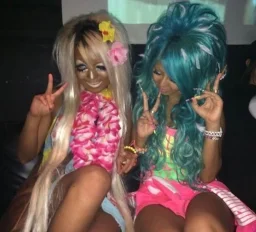


The Definition of Gyaru!
Gyaru is one of the most recognizable and influential youth fashion subcultures to emerge from Japan in the late twentieth century. Known for dramatic makeup, dyed hair, glamorous fashion, and rebellious attitudes toward traditional expectations of femininity, gyaru developed into far more than a clothing style. It became a cultural movement connected to identity, gender expression, consumerism, friendship, nightlife, and resistance to social conformity. Over several decades, gyaru evolved into many distinct substyles, each with its own aesthetics and values, while continuing to shape Japanese pop culture and influence fashion communities around the world.
The word “gyaru” comes from the Japanese pronunciation of the English word “gal.” The term is believed to have become popular in the 1970s after a jeans advertisement by the brand GALS used the slogan “Can’t live without men.” Young women who embraced fashionable, flashy lifestyles began to be associated with the word “gal,” which eventually transformed into “gyaru” in Japanese usage. Although the term originally referred broadly to trendy young women, it later came to describe a very specific fashion and social culture.
At its core, gyaru is defined by exaggeration and self-expression. Traditional Japanese beauty standards historically emphasized modesty, pale skin, natural black hair, restrained makeup, and quiet femininity. Gyaru challenged many of these ideals directly. Early gyaru fashion embraced bleached or dyed hair, artificial tans, heavy makeup, decorated nails, platform shoes, flashy accessories, and revealing or highly stylized clothing. This was not simply about appearance; it symbolized independence and rejection of rigid social expectations placed upon young women in Japan.
The history of Gyaru!
The rise of gyaru culture is closely tied to Japan’s economic boom during the 1980s and the consumer culture that developed around it. During this period, teenagers and young adults had increasing access to fashion magazines, shopping districts, cosmetics, and nightlife. Urban centers such as Shibuya became gathering places for fashionable youth. Department stores, boutiques, karaoke lounges, clubs, and cafés formed the social landscape in which gyaru identity flourished.
One of the earliest and most important predecessors to modern gyaru was the “kogal” movement of the 1990s. Kogal, often associated with high school girls, combined shortened school skirts with loose socks, flashy accessories, tanned skin, and dyed hair. Kogal culture became highly visible in districts like Shibuya and generated enormous media attention. The style reflected both rebellion and participation in youth consumer culture. Kogals were often portrayed by the media as materialistic or disruptive, but many participants viewed the fashion as empowering and socially liberating.
Fashion magazines played a major role in shaping gyaru identity. Publications such as egg, Popteen, and Ranzuki popularized trends and provided makeup tutorials, fashion advice, and lifestyle content. These magazines did not merely document the subculture; they actively created and organized it. Readers copied hairstyles, poses, makeup techniques, and slang from magazine models, who became celebrities within the gyaru community. In many ways, gyaru culture anticipated modern influencer culture long before social media became dominant.
By the late 1990s and early 2000s, gyaru had diversified into many substyles. One of the most famous was ganguro, characterized by deep artificial tans, bleached hair, white eye makeup, and bright clothing. Ganguro intentionally exaggerated features that contrasted sharply with traditional Japanese beauty ideals. Some scholars interpreted this style as a rejection of expectations surrounding purity, passivity, and uniformity. Others saw it as an expression of playful performance and youth rebellion.
An even more extreme variation called yamanba or manba emerged shortly afterward. These styles included extremely dark tans, neon clothing, colorful stickers or face decorations, and dramatic makeup with white lips and eyeshadow. The aesthetic appeared shocking to mainstream society and was frequently criticized in Japanese media. However, participants often described their communities as supportive spaces centered around friendship, dancing, and creativity.
Not all gyaru styles focused on dramatic tans or rebellion. As the movement expanded, many softer and more glamorous variations appeared. “Onee gyaru” emphasized elegance and adult femininity, often inspired by luxury fashion and hostess culture. “Hime gyaru,” meaning “princess gyaru,” featured large curled hair, lace dresses, rhinestones, and a hyper-feminine aesthetic inspired by European princess imagery and rococo fashion. “Agejo” style combined glamorous nightlife fashion with influences from hostess clubs (though i dont know much about it so i wont dwell on it any further!)
Despite their differences, these substyles shared certain core ideas: attention to beauty and presentation, devotion to fashion culture, social belonging, and freedom from conservative expectations. Gyaru culture encouraged experimentation and visible individuality in a society often associated with group harmony and social discipline.
The social meaning of gyaru has always been debated. Some viewed gyaru as superficial consumerism because of its strong connection to shopping, cosmetics, and fashion brands. Others argued that gyaru represented a form of feminist resistance. While gyaru was not explicitly political, it challenged expectations that women should remain quiet, obedient, and modest. Many gyaru embraced confidence, flirtation, humor, and independence in ways that disrupted traditional gender norms.
Technology also shaped gyaru culture significantly. During the late 1990s and early 2000s, Japanese flip phones became important accessories among gyaru communities. Phones were heavily decorated with charms, stickers, and rhinestones (blinging out accessories, belonging and electronics is called decoden i think!!!). Text messaging, photo sharing, and online forums helped gyaru trends spread rapidly across Japan. Purikura photo booths became especially important social spaces where friends could take stylized photographs together and decorate them digitally. These images reinforced group identity and personal branding long before Instagram or TikTok existed.
Music and dance were equally influential. Parapara dancing, synchronized routines performed to Eurobeat music, became strongly associated with gyaru nightlife culture. Clubs in Tokyo hosted events where gyaru and gyaru-o (male gyaru) gathered to dance, socialize, and display fashion. Male gyaru styles often included dyed hair, tanned skin, flashy clothing, and elaborate hairstyles, demonstrating that the subculture was not limited exclusively to women.
By the late 2000s and early 2010s, gyaru culture began to decline in mainstream visibility. Several factors contributed to this shift. Economic changes made extravagant fashion more difficult to maintain, social media altered how trends spread, and newer fashion movements emerged among younger generations. Some magazines closed or lost popularity, and dramatic ganguro styles became less common. Natural makeup and minimalist fashion trends gained influence instead.
However, gyaru never truly disappeared. Rather, it transformed. Contemporary gyaru communities continue both in Japan and internationally through online platforms, fashion events, and revival movements. Vintage gyaru magazines, archived photographs, and old fashion tutorials are widely shared online. Young people inspired by early 2000s aesthetics have rediscovered gyaru fashion through TikTok, YouTube, and Instagram.
Modern gyaru revival movements often blend nostalgia with reinterpretation. Some participants recreate classic ganguro or hime gyaru styles with historical accuracy, while others adapt gyaru principles to contemporary fashion. International communities in Europe, North America, Latin America, and Southeast Asia have embraced gyaru as a creative and expressive subculture beyond Japan itself.
The influence of gyaru can also be seen in mainstream beauty culture today. Contouring makeup, dramatic eyelashes, elaborate nail art, and heavy accessorizing—once viewed as excessive or rebellious—have become normalized globally through beauty influencers and celebrity culture. Many trends that gyaru communities popularized decades ago now appear in ordinary fashion and social media aesthetics.
The Conclusion!
Importantly, gyaru should not be reduced to stereotypes. Media portrayals often focused only on shock value, presenting gyaru as delinquent, shallow, or overly sexualized. In reality, the subculture was diverse and constantly evolving. For many participants, gyaru offered friendship, confidence, creativity, and emotional support. The fashion functioned as both armor and performance, allowing young people to shape identities on their own terms.
The history of gyaru reveals broader truths about youth culture and social change. Fashion subcultures often emerge when young people seek alternatives to dominant expectations. In Japan, gyaru became a visible challenge to ideals surrounding femininity, discipline, and social conformity. It also reflected the power of media, consumer culture, and urban life in shaping identity.
Today, gyaru remains culturally significant because it represents more than makeup or clothing. It symbolizes self-invention, rebellion through beauty, and the desire to stand out in environments that pressure individuals to blend in. Although the appearance of gyaru has changed over time, its spirit of expressive individuality continues to inspire people around the world.
The Gallery!


Comments
Displaying 1 of 1 comments ( View all | Add Comment )
Toot toot
You cool as fóc !
ahhh THANK YOU!!! much appreciated!!!
by dearnicole; ; Report