


tried out a new writing format and style again!! enjoy reading and apologies for not posting freauently....
The gyaru subculture is one of the most influential, misunderstood, and visually striking youth movements to emerge from modern Japan. Often reduced to a fashion trend characterized by tanned skin, dramatic makeup, and flashy clothing, gyaru was in reality a complex cultural phenomenon that challenged social expectations surrounding femininity, beauty, behavior, and conformity.
At its height during the late 1990s and early 2000s, gyaru represented not merely a style but a rebellion against traditional Japanese ideals of womanhood. The term "gyaru" derives from the English word "girl," popularized in Japan through an advertising campaign in the 1970s. By the 1990s, however, the word had evolved into a label for a growing youth culture centered around self-expression and resistance to social norms. Japanese society has historically emphasized collectivism, modesty, and conformity, particularly for young women.
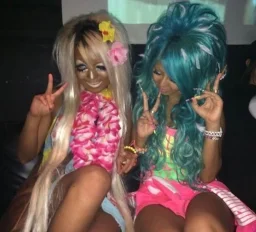
The ideal woman was expected to be quiet, polite, academically successful, and naturally beautiful. Gyaru deliberately rejected these expectations. Appearance as Rebellion The most immediately recognizable aspect of gyaru culture is its visual presentation. 5 Traditional Japanese beauty standards favored pale skin, dark straight hair, and understated makeup. Gyaru fashion often embraced the exact opposite. Many gyaru dyed their hair blonde, brown, or other lighter colors. Heavy makeup, false eyelashes, circle lenses, elaborate nail art, and dramatic clothing became defining features. This aesthetic functioned as a visible declaration of individuality. Rather than striving to appear naturally beautiful, gyaru celebrated artificiality and transformation. Makeup was not used to hide itself but to create a new identity.
One of the most radical branches was ganguro, whose followers darkened their skin through tanning while applying white makeup around the eyes and lips. In a society where pale skin had long been associated with beauty and status, ganguro represented a direct challenge to established standards. Consumerism and Femininity Gyaru culture was deeply connected to fashion consumption. Magazines such as Egg Magazine, Popteen, and Ranzuki shaped trends and helped create a sense of community among participants. Unlike many subcultures that reject mainstream consumer culture, gyaru embraced shopping and fashion as tools of self-creation. Clothing brands, accessories, cosmetics, and hairstyles became methods through which young women could construct their identities.
This relationship with consumerism has led some scholars to argue that gyaru was simultaneously rebellious and commercialized. Participants challenged social norms, but often through products and fashion industries that profited from the movement. The Importance of Female Friendship An aspect often overlooked in Western discussions of gyaru is the significance of social bonds. Gyaru culture emphasized friendship groups, shared activities, and mutual support. Groups of gyaru would gather in shopping districts such as Shibuya 109 and around the broader area of Shibuya. These spaces became social centers where trends were created, identities were negotiated, and friendships were strengthened. The collective nature of gyaru communities challenged stereotypes that portrayed the subculture as superficial. For many participants, the social network was as important as the fashion itself.
Substyles and Internal Diversity
Gyaru was never a single unified style. It consisted of numerous subgenres that reflected different tastes and values. 8 Some notable examples include: Kogal (Kogyaru): School-uniform-inspired fashion mixed with trendy accessories. Ganguro: Extreme tanning and dramatic makeup. Manba and Yamanba: Even more exaggerated versions of ganguro. Hime Gyaru: "Princess gyaru" characterized by elaborate curls, lace, rhinestones, and luxurious aesthetics. Onee Gyaru: A more mature and sophisticated interpretation. Agejo: Glamorous nightclub-inspired fashion emphasizing femininity and luxury.
The diversity of these substyles demonstrates that gyaru was not simply about looking rebellious; it offered multiple ways for young women to experiment with identity.
Media Panic and Public Perception Throughout its history, gyaru was frequently criticized by mainstream Japanese media. Journalists and commentators often associated the subculture with delinquency, consumer excess, and declining social values. This reaction is common in youth subcultures. Similar moral panics surrounded punk in Britain, hippies in the United States, and various youth movements across the world. Distinctive appearance often becomes a symbol onto which broader social anxieties are projected.
The media's portrayal of gyaru frequently overlooked the creativity, community, and personal empowerment many participants found within the movement. Decline and Legacy By the mid-2010s, gyaru's dominance had begun to fade. Fashion trends shifted toward more natural makeup and minimalist aesthetics.
Many iconic gyaru magazines either closed or reduced publication. However, the subculture's influence remains visible. Modern Japanese beauty trends, fashion influencers, social media aesthetics, and even international alternative fashion communities continue to borrow elements pioneered by gyaru. Today, gyaru survives through dedicated communities, revival movements, online spaces, and enthusiasts who preserve classic styles while adapting them for contemporary culture.
A Cultural Dissection
At its core, gyaru can be understood as a contradiction. It challenged conformity while creating its own rules. It rejected conventional beauty standards while establishing alternative standards. It promoted individuality yet relied heavily on group identity. It was anti-traditional but deeply tied to commercial fashion industries. These contradictions are not weaknesses; they are precisely what make gyaru culturally significant. Like many youth subcultures, it was a space where young people negotiated freedom, identity, gender expectations, and social belonging. The lasting significance of gyaru lies not in blonde hair, platform shoes, or dramatic eyelashes. Its true importance is that it gave a generation of young women permission to become visibly different in a society that often rewarded blending in. Through fashion, makeup, language, and community, gyaru transformed appearance into a form of cultural resistance and self-definition.
Comments
Displaying 2 of 2 comments ( View all | Add Comment )
n-has-a-site
what do u think of people who say you dont need to have the gyaru style to be gyaru? genuinely curious.... I keep on seeing contradicting things...
gyaru definitely relies on energy a lot (age age, also known as uplifting motivation), but you need the makeup! as long as i dont have my make on, i am not gal!!
gals in the 1990s only dressed in gyaru on the weekends if i remember correctly, so you do need a few stuff. you can be gal without a tan or bleached hair, though!
thats my take on it personally!
by dearnicole; ; Report