



MUSICAL NOTATION EXPLAINED

Musical Notation is a written Visual representation of music that is almost like a set of instructions, except written in a different more musical language. Being able to write down music allows musical compositions to be shared and spread worldwide and creates the opportunity for compositions to be reproduced and for the piece of work to continue on being played for centuries,
Notation is essentially musical transcripts.
It can be separated into two types of musical notation
☆ Conventional/standard/traditional notation☆ Unconventional/non-traditional/graphic notation
Graphic notation was first introduced in a postmodern musical movement by modern composers in the early twentieth century, Instead of the traditional Stave composers who write graphic notation use signs and symbolic imagery to create a visual piece of sheet music rather than notes on a stave.
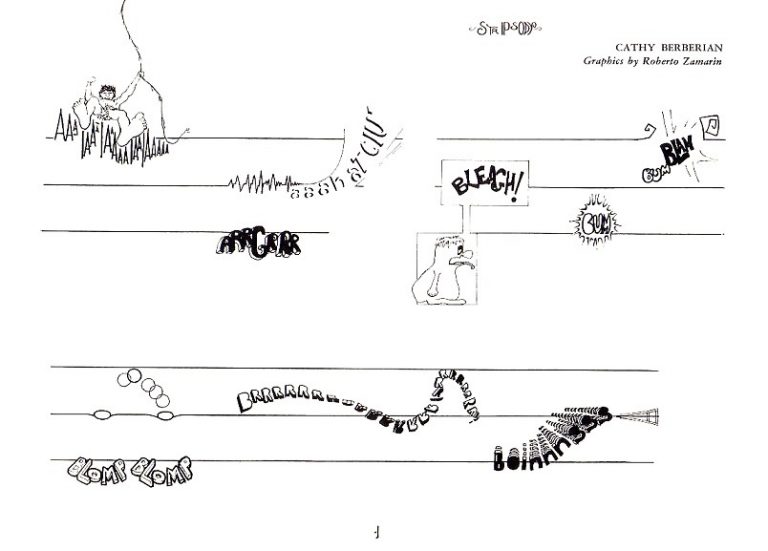
PICTURE ABOVE: EXAMPLE OF GRAPHIC NOTATION
Traditional/Conventional notation is the most occurring way of representing sheet music.
It comes from Europe in the seventeenth century and is represented by notes placed on a grid like frame. This grouping of five lines is called the stave, notes are placed on it to identify certain sounds.
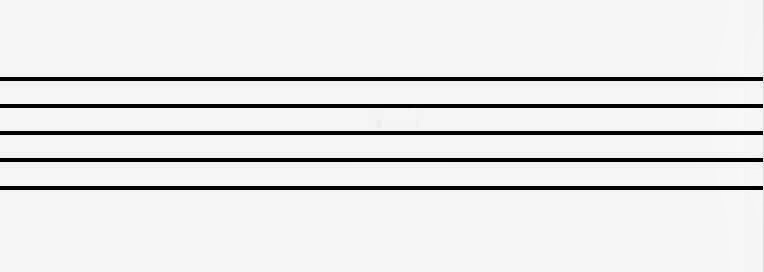
PICTURE ABOVE: BLANK STAVE
The image above shows a blank stave, its a series of five lines, with four spaces in between. Notes are place on these lines to differentiate the notes and let musicians know what knows to play and when.
The first seven letter of the alphabet are put on the stave, A,E,B,C,D,F,G.
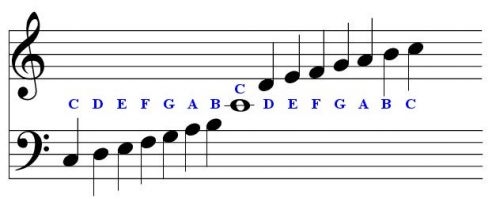
Shown above is the treble clef and bass clef. The clefs break down musical symbols into pitch of notes and how they are played. The treble clef is the first series of notes you see on the stave, the treble clef is represented by a beautiful swirly thing-y, the bass clef is the second line, and is represented by what almost looks like a sad face - how sad.
Knowing where the notes are on the stave and the two clefs helps you understand how to play what you are reading. Notes can be remembered through acronyms.
Treble clef - notes directly on the five lines ☆ E,G,B,D,F "Every, Good, Boy, Deserves, Fruit"
Treble clef - notes not directly on the lines and instead in-between in the spaces ☆ F,A,C,E "FACE/FACE IN THE SPACE"
Bass clef - notes directly on the five lines ☆ G,B,D,F,A "Good, Birds, Don't, Fly, Away"
Bass clef - notes not directly on the lines and instead in-between in the space ☆ A,C,E,G "All, Cows, Eat, Grass"
Comments
Displaying 0 of 0 comments ( View all | Add Comment )