



The whole story begins with two friends, Alex Rigopulos and Eran Egozy, who met at the MIT Media Lab; during one of their lab sessions, they developed a music-generation system where you could create music by moving a joystick.
They thought about it and said, "Hey, what if we start a videogame company?"
and from there harmonix music system was born in 1995
They knew that if they wanted to succeed, the best way to do so was through video games; Harmonix's first game sold only 300 copies, and they realized that the people who bought it would just move a joystick for 15 minutes and then get bored.
But they didn't give up; they drew inspiration from the Japanese karaoke trend that was gaining popularity at the time. The cool thing wasn't singing well, but rather singing like the original artist so the software would award you more points—plus, there was the brilliant and wonderful PaRappa the Rapper.
Thanks to a partnership with Sony, Frequency was born—a game where you manage eight instruments within a single track while ensuring you play the song correctly. It featured a great deal of underground electronic music; released in 2001, it was adored by critics. However, because the game consisted entirely of songs no one recognized, not many people were interested in buying it for their PlayStation 2.
It turns out that over in Japan, there was a somewhat famous game called Guitar Freaks where you had to press buttons on a guitar-shaped controller; Harmonix saw pure gold in that, but they didn't yet have a way to produce special controllers—until RedOctane came along and became the supplier of those famous plastic guitars.
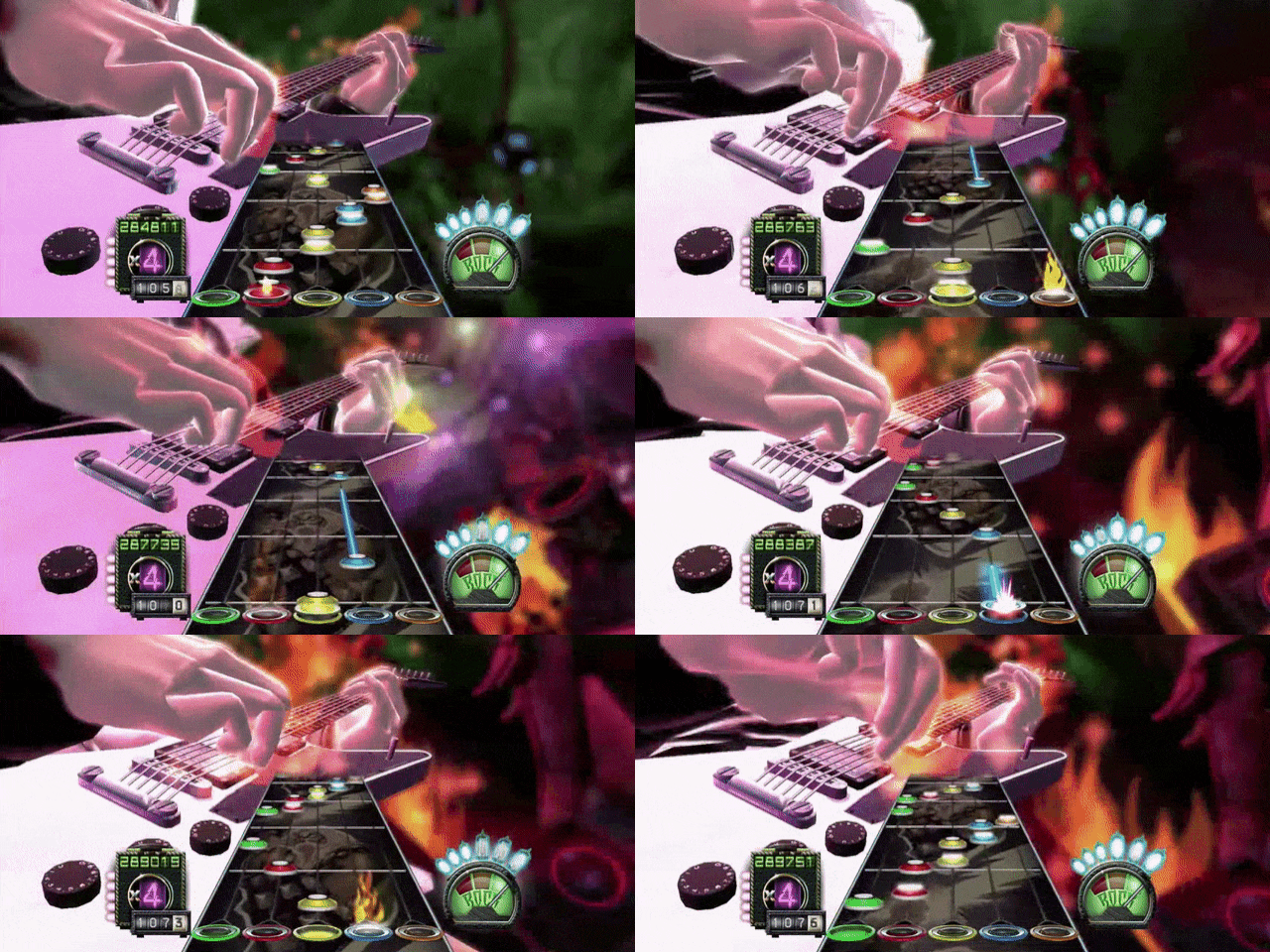
Finally, in 2005, Guitar Hero was released for the PlayStation 2; the game featured innovative gameplay using five colored buttons to play on-screen notes, a unique strum bar mimicking guitar strings, and a whammy bar to create that "wah-wah-wah-wah-wah" sound—all housed in a non-biodegradable plastic guitar.
They chose rock songs because we’re all guys from Texas who love rock; with hits like "I Love Rock 'n' Roll," "Smoke on the Water" and the game's best track—Motörhead's "Ace of Spades"—the audience became hugely interested in the concept of being a rock star from the comfort of their own homes.
And without having to play an outdated, boring real guitar, the game was a massive success; so they released Guitar Hero 2—now available on PS and Xbox 360. They put more effort into this game, featuring more bands and hit songs like "Heart-Shaped Box" and "Free Bird," among others. Artists had more faith in Harmonix, trusting them with their songs, and the sales figures and success spoke for themselves.
And then came the betrayal: RedOctane was bought by Activision for $100 million. The problem was that the acquisition gave Activision the rights to the franchise, so Harmonix was screwed; Harmonix ended up being bought by MTV Games.
As their final game with Harmonix, they released a spin-off titled Guitar Hero: Rock the 80s, which was essentially the same as the franchise's second installment; Activision then assigned Neversoft to develop the Guitar Hero games, resulting in the release of what many consider the best game in the series: Guitar Hero 3.
In addition to featuring licensed songs, the game now included a story mode, an online mode, and epic battles against Slash, Tom Morello, and the Devil himself; where the game really shines is in its tracklist—songs like "Reptilia," "Were You were Young," and "Talk Dirty to Me," among others.
I discovered The Killers through that amazing game. Before they could do anything else, Harmonix released Rock Band—something very similar to Guitar Hero—but they really went all out and added more instruments, like drums and a microphone.
During this "plastic instrument war," companies started churning out spin-offs and highly specific titles. The funniest part is that all these games were released within a span of just three years, saturating the market with Guitar Hero and Rock Band titles; did we really need a Van Halen game? Or a Lego one?
By 2010, the game was already overplayed and stale; people didn't know what to buy anymore since new titles were being shoved in their faces every five months, so the public stopped buying. Activision sold off Harmonix due to poor sales, and the audience moved on to whatever was trendy at the time; Neversoft ended up making Call of Duty games because Activision had other franchises it could actually milk for profit. In short, Guitar Hero suffered a slow, painful death.
thx for reading!!
Comments
Displaying 0 of 0 comments ( View all | Add Comment )