


There is something especially sad about The Great Gatsby; Gatsby manages to build exactly the kind of life that seems like it should make him happy. He has a huge mansion, cars, fancy clothes, money, parties attended by hundreds of people, and a reputation that makes everyone talk about him. Yet, when he dies, almost no one shows up.
And I think that is one of the most important ideas in the novel. Gatsby manages to create a perfect image of himself, but he never manages to build a life that is truly his own. Gatsby is surrounded by people, but in reality, he is completely alone.
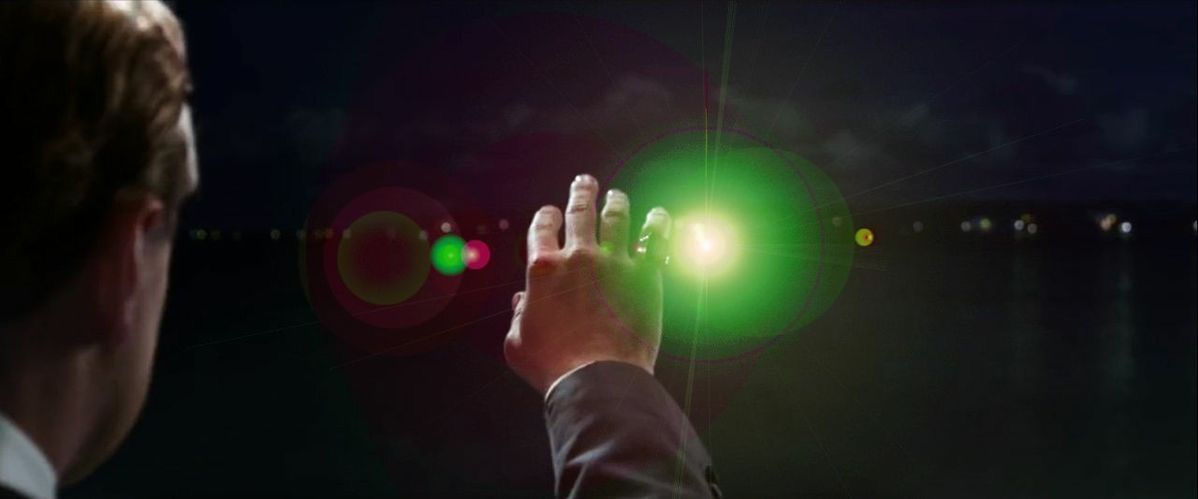
It is easy to read Daisy as Gatsby’s great love story, but I think that simplifies his character too much. Gatsby is not only in love with Daisy. He is in love with what Daisy represents. Daisy represents the past that Gatsby wants to recover. That is why the famous green light across the bay is so important. Gatsby looks at it because it symbolizes something that is physically close, but emotionally seems impossible to reach.
And there is a very interesting contradiction: Gatsby manages to get physically closer to Daisy, but the closer he gets to her, the more obvious it becomes that the real Daisy does not match the Daisy he remembers. Gatsby wants Daisy to say that she never loved Tom. He wants to erase entire years of her life and return to the moment when they were together. His desire is not simply, “I want to be with Daisy,” but rather, “I want the past to be exactly the way I want to remember it.” That is why his famous belief that the past can be repeated is so important. Gatsby has built his entire life around that idea, and in the end, that idea destroys him.
Nick is another character who changes significantly by the end. For much of the novel, Nick tries to present himself as someone who “does not judge” other people. He observes Gatsby, Daisy, Tom, and Jordan and seems to remain somewhat on the outside. But Gatsby’s death changes his relationship with him. When Gatsby dies, Nick discovers that Gatsby practically had no friends. Nick tries to call people and get them to come to the funeral. He tries to contact Daisy. He tries to get someone to show up. But the people who filled Gatsby’s parties disappear when Gatsby can no longer offer them anything.
And that makes Nick much more important than simply a narrator. Nick is the one who stays. He is not Gatsby’s closest friend, nor is he a family member, but when everyone else disappears, he is the one who decides to take responsibility for Gatsby.
In the book, Gatsby dies after waiting for hours for a phone call from Daisy. He is convinced that there is still a possibility that she will leave Tom and go away with him. Gatsby has built his entire life around that hope. The most tragic part is that Gatsby does not seem to understand that Daisy has already made her choice. He continues to think about the Daisy from the past, the girl he met years earlier, rather than the woman she has become.
In the movie, this idea becomes even more cruel. Gatsby is in the pool waiting for that call, and when he hears the phone, he believes it might be Daisy. He gets out of the water to answer it, and that is when Wilson shoots him. The scene makes it seem as though Gatsby literally dies waiting for Daisy to return to his life.
This is important because Gatsby does not die only because of a bullet. Before he dies, he is already trapped in an illusion. His real problem is not simply Daisy; it is his inability to accept that the past cannot be changed.
Gatsby believes that he can recover the past because his entire identity is based on the idea that a person can completely reinvent themselves. James Gatz ceases to exist, and Jay Gatsby appears. The poor boy from the Midwest becomes a wealthy and mysterious man. He changes his name, his appearance, the way he speaks, and his life.
But there is one thing he cannot change: time.
Gatsby can buy a mansion, but he cannot buy back the years that passed since he met Daisy.
This is perhaps the most interesting question the ending leaves us with. Did Daisy love Gatsby? She probably did feel something for him. But not enough to sacrifice her life, her marriage, or her security. Did the guests love Gatsby? Not really. They wanted his parties. Was Wolfsheim his friend? To some extent, but when the moment comes to prove it, he does not show up either. Did Nick love him? Nick is probably the person who comes closest to genuinely caring about him, even though their relationship is brief. Did his father love him? Yes, and in a completely different way. Henry Gatz does not love Gatsby because of his money, his mansion, or his reputation; he loves him because he is his son.
There is something that makes Gatsby different from many of the other characters. Gatsby is naive, obsessive, and idealizes Daisy. He participates in illegal businesses and lies about his past, but he also has something the others have lost: hope. He genuinely believes in his dream.
In the end, Nick turns Gatsby’s story into something much bigger than the story of a wealthy man who fell in love with a woman. Gatsby represents anyone who believes that, if they go far enough, they will finally reach what they desire.
What happens when we finally reach our dream and discover that the dream no longer exists?
That is perhaps why the ending of the book is so powerful. Gatsby’s tragedy is not simply that he dies. It is that he spends his entire life moving toward something that, in reality, existed only in his memory.
And perhaps that is the reason the funeral is so important. The parties show who wanted to be close to Gatsby when he had something to offer; the funeral shows who was willing to be close to him when he had nothing left to offer. And the answer is almost no one.
9/10
What do you think?
Comments
Displaying 1 of 1 comments ( View all | Add Comment )
Ariadne ♡
i loved this post!!! idk much about the novel but this was a cool way of learning more :)