
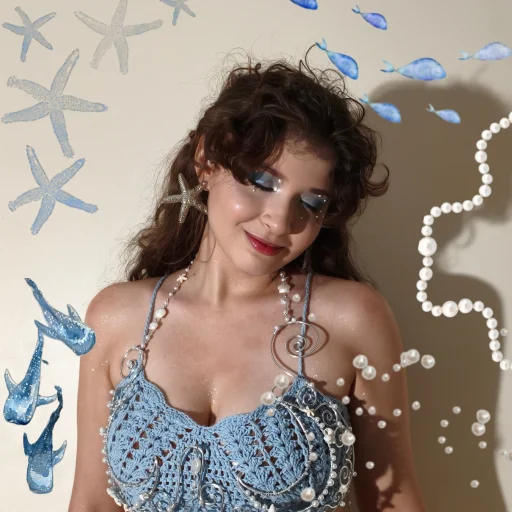


೫` ⃟ ཹ։❀ ፧ ੈ✩‧₊ ૪'ރ፧🌊 ࿐𝐖𝐞𝐥𝐜𝐨𝐦𝐞 ⋅ ..⃗. ┊ೃ ╰► ꒱ ➛ ↴🦪 ❱ ✿
𓇼 ⋆. ̊ 𓆉 𓆝 𓆡⋆. ̊𓇼 ⋆. ̊ 𓆉 𓆝 𓆡⋆. ̊𓇼 ⋆. ̊ 𓆉 𓆝 𓆡⋆. ̊𓇼 ⋆. ̊ 𓆉 𓆝 𓆡⋆. ̊𓇼 ⋆. ̊ 𓆉 𓆝 𓆡⋆. ̊𓇼

𝄞⋆。𖦹 ˚ 𓇼 ˚。⋆⨾𓍢ִ໋𝐈𝐧𝐭𝐫𝐨𝐝𝐮𝐜𝐭𝐢𝐨𝐧:𓆉 ⋆.˚𓇼 ⋆.˚𓆟
ʰᵒʷ ᵃᵇᵒᵘᵗ ʷᵉ ᵈⁱᵛᵉ ⁱⁿᵗᵒ ᵗʰᵉ ʰⁱᵍʰ ᵗⁱᵈᵉ ᵒᶠ ˡᵉᵍᵉⁿᵈᵃʳʸ ᵐᵉʳᵐᵃⁱᵈˢ?
Have you ever found yourself gazing at the ocean horizon, wondering what lies beyond the vast blue expanse? Far more than just ancient legends told by solitary sailors, the world of mermaids is an invitation to theorize about and explore the unimaginable—to dream and rediscover the untamable beauty of nature and fantasy. In this blog, I will cover everything from age-old folklore to the modern collective imagination surrounding mermaids.

𓆉°❀🌕.ೃ࿔*:・𝐓𝐨𝐩𝐢𝐜:⋆。𖦹 ˚ 𓇼 ˚。⋆
ᵗʰᵉ ʷᵒʳˡᵈ'ˢ ᵒˡᵈᵉˢᵗ ʳᵉᶜᵒʳᵈ ᵒᶠ ᵐᵉʳᵐᵃⁱᵈˢ
The earliest record of the mermaid legend dates back to around 1000 BCE in ancient Assyria 🇸🇾(modern-day Syria and Iraq/2026). The first mermaid documented in history is the fertility goddess Atargatis (known as Derceto to the Greeks), who threw herself into a lake following a tragic bereavement and saw the lower half of her body transformed into that of a fish. The story recounts the legend of Atargatis (also known as Dea Syria), a fertility goddess; in this tale, the goddess regrets accidentally killing her mortal lover and throws herself into a lake to drown. Because of her immense beauty, the gods did not allow her to die. Instead, her lower half transformed into a fish, while her upper half retained its human form.
⋆。𓆉𖦹 ˚ 𓇼 ˚。 𝐓𝐨𝐩𝐢𝐜:𓂃 ོ⋆☀︎𓂃⛱
🇬🇷ᵍʳᵉᵉᵏ ˢⁱʳᵉⁿˢ
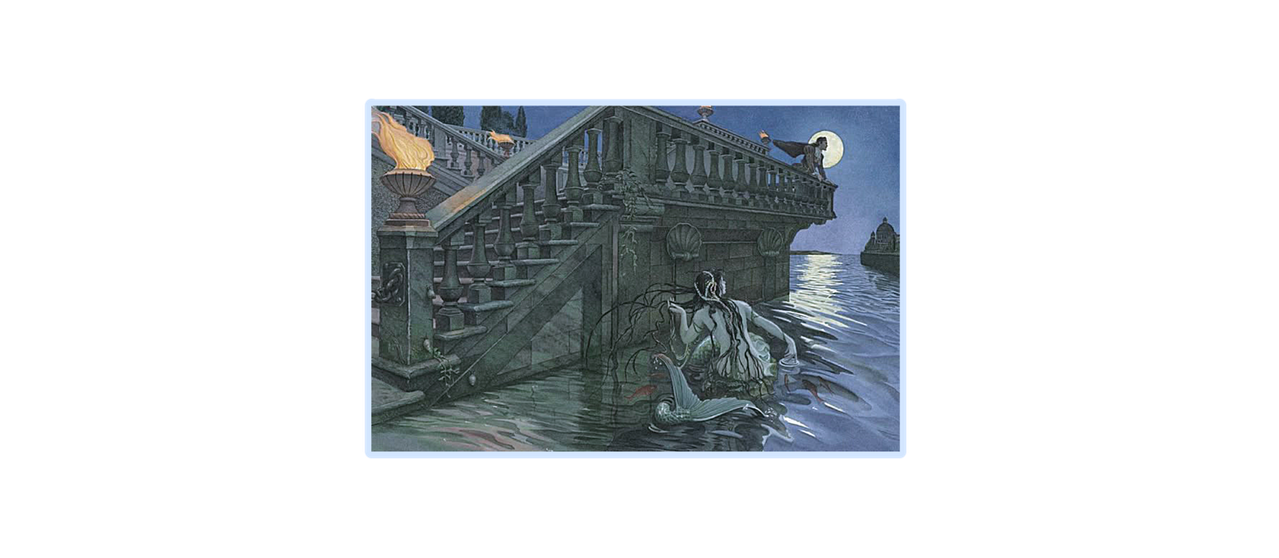
Unlike modern depictions, the original sirens of Ancient Greece had the bodies of birds (such as large owls or hawks) and the head or bust of a woman. Known for their hypnotic song, they inhabited coastal rocks and lured sailors to their deaths on the reefs—differing drastically from modern fish-tailed figures—yet, despite this odd appearance, they were still considered beautiful creatures. Legend held that if anyone managed to resist their allure, the sirens were fated to cast themselves into the sea and die—cruel, isn't it? Especially when we consider that the hero Odysseus wanted to hear their song without dying; he ordered his crew to plug their ears with wax and had himself tied firmly to the ship's mast, all for the sake of curiosity. ;-;
One of the most famous versions of their mythical origin recounts that they were companions of Persephone. They were cursed with this monstrous form by the goddess Demeter for failing to protect Persephone from being abducted by Hades. Other traditions suggest they were punished by Aphrodite for spurning love.

𓇼⋆.˚𓆝𓆡⋆𝐓𝐨𝐩𝐢𝐜:ִֶָ𓂃 ࣪ ִֶָ🌀𓆉་༘࿐
🇧🇷ᵇʳᵃᶻⁱˡⁱᵃⁿ ᵐᵉʳᵐᵃⁱᵈˢ
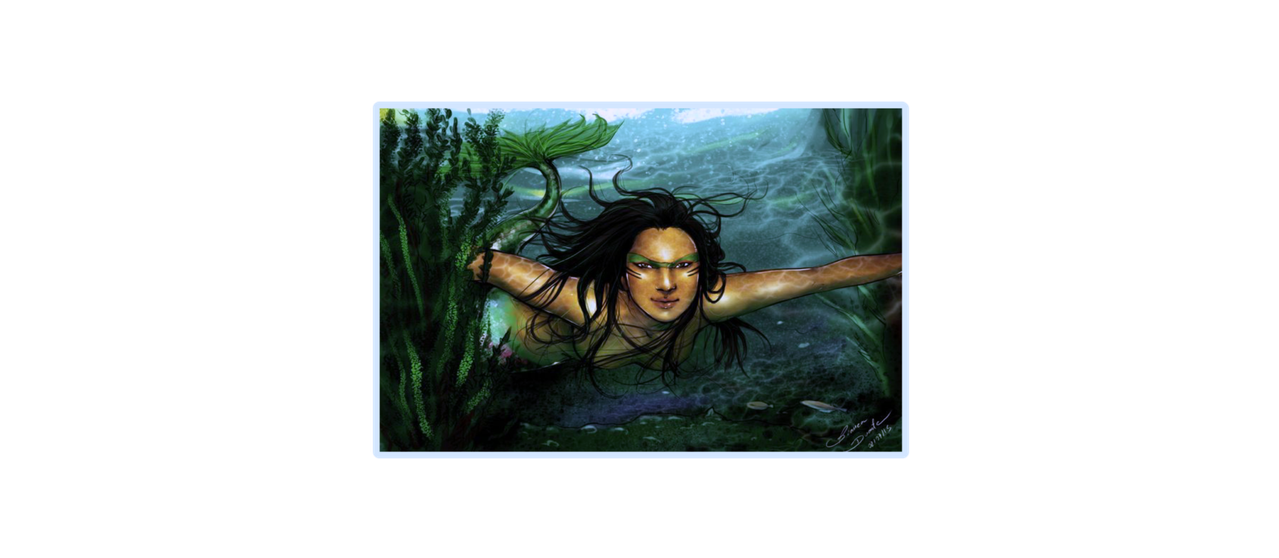
Iara (or Yara)—derived from the Indigenous term *Iuara*—means "she who dwells in the waters." She is a mermaid (half-woman, half-fish) who lives in the waters of the Amazon. Iara is often confused with the African *orisha* Iemanjá, the queen of the sea. She is the famous freshwater mermaid of Brazilian folklore, originating from Amazonian legends. Known as the "Mother of the Waters" (*Mãe-d'Água*), she is depicted as a young woman of great beauty—half-woman, half-fish—who uses her magical song to lure men to the river depths, from which they never return. Her origin lies in legend: Iara was a brave warrior possessed of enviable beauty. Because of this, her brothers grew jealous and decided to kill her. However, during the confrontation, Iara’s warrior skills allowed her to turn the tables, and she ended up killing her brothers. Terrified of punishment from her father—the tribe's shaman and chief—Iara attempted to flee, but her father managed to find her. As punishment for her brothers' deaths, he cast her into the river. The moon (Jaci), reflected in the river, decided to save the beautiful young woman by transforming her into the mermaid Iara. Since then, Iara has inhabited the rivers of the Amazon.
⋆。 🪞 ˚ 𖦹 ˚。 ⋆𝐓𝐨𝐩𝐢𝐜:⊹ ࣪ ﹏𓊝﹏𓂁⊹ ࣪ ˖
🇳🇬ᵃᶠʳⁱᶜᵃⁿ ᵐᵉʳᵐᵃⁱᵈ
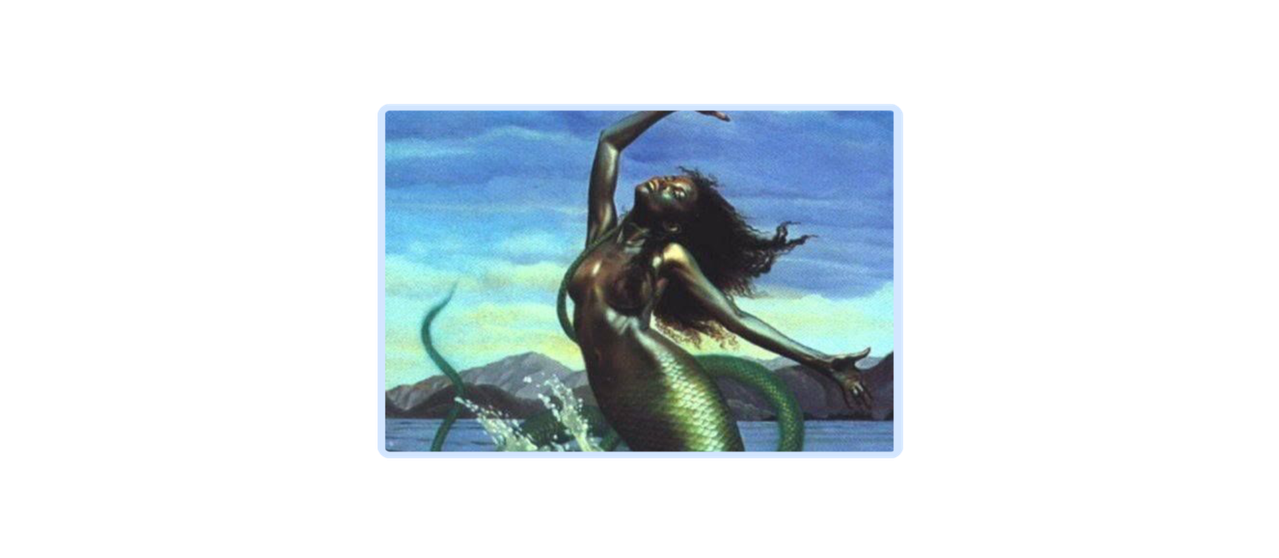
The story of Mami Wata, the "Mother of the Water," is fascinating because she is a complex spiritual entity that transcends time and geographical boundaries. She is a pillar of African spiritual heritage and a powerful symbol of resistance and cultural resilience. The name Mami Wata literally means "Mother of the Water." She is not a single deity, but an aquatic spirit revered in various regions of Africa and who, through the diaspora, spread to the Caribbean and parts of Latin America. She is the representation of the mysterious forces of the seas and rivers. Her image is diverse and striking. She is often described as a woman of supernatural beauty, sometimes appearing with a fish or serpent tail, or even as a woman adorned with exotic jewels and long, curly hair reminiscent of ocean waves. Mami Wata is a dual figure. On the one hand, she is a powerful healer, sought by her followers to grant health, wealth, fertility, protection, and prosperity. On the other hand, she demands respect and loyalty: those who abuse her generosity or disrespect the dominion of the waters may face punishment, accidents, or sudden illnesses. A short story: A poor fisherman found a mirror and a golden comb belonging to Mami Wata by the riverbank. In a dream, the goddess promised him infinite wealth and prosperity in exchange for devotion, respect, and exclusivity. The fisherman quickly became rich, but fortune made him arrogant, causing him to forget his promise and break the pact with the deity. As a consequence, the river raged furiously and carried away all his wealth in a flood, proving that the generosity of the waters demands eternal humility and respect, and never greed.
(Although the mirror and comb often remind people of Oxum (due to syncretism and her strong presence in Brazil), the archetype of this cautionary tale belongs to the great mother of the African waters, Mami Wata, perfectly illustrating the respect demanded by the primordial forces of rivers and oceans.)
⋆。𖦹 ˚ 𓇼 ⛱˚⋆𝐓𝐨𝐩𝐢𝐜:⋆˚꩜。⚓︎𓇼𓆉☼
ᵐᵉʳᵐᵃⁱᵈˢ ⁱⁿ ᵖᵒᵖ ᶜᵘˡᵗᵘʳᵉ
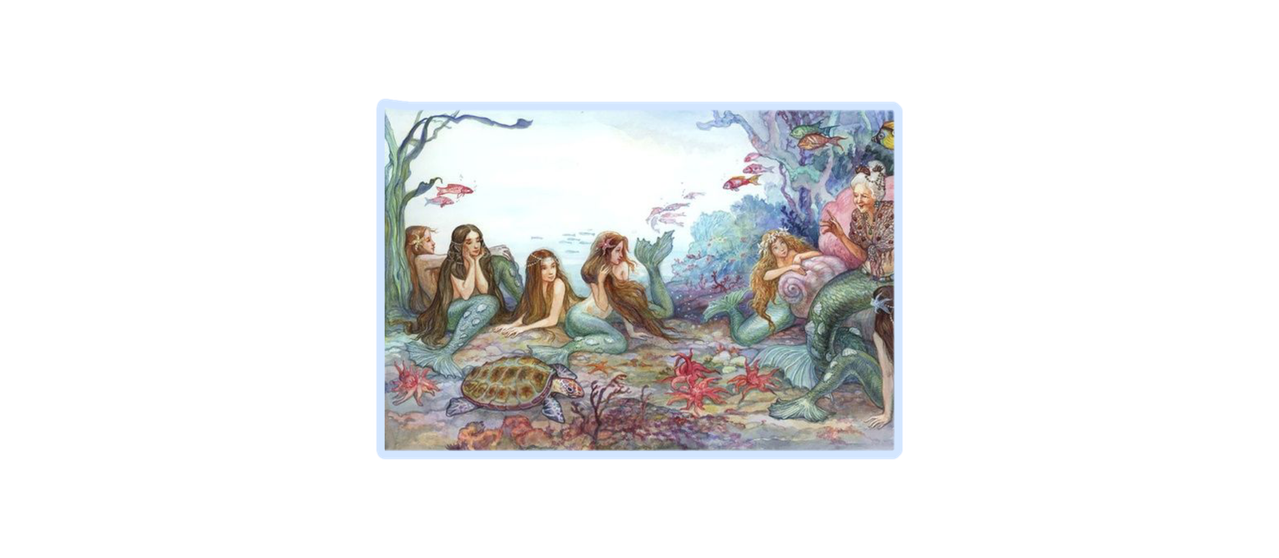
The classic image of the mermaid—featuring a fish's tail and a woman's body—gained prominence during the Middle Ages. The most famous medieval literary record containing this description is the *Liber Monstrorum* (7th or 8th century), a catalog of fantastic creatures. Mermaids are legendary beings that have inhabited the popular imagination for at least 3,000 years. A "modern" example is *The Little Mermaid* (Disney, 1989); loosely based on Hans Christian Andersen's tragic tale, the animated film reimagined the mermaid's visual identity and purpose, transforming the dangerous creature into a curious, dreamy teenager. The ocean ceased to be an unknown abyss and became a "safe home"—full of wonder—in contrast to the terrestrial world. Another work, *Aquamarine* (2006), modernizes the concept by placing the mermaid in an urban, teenage setting. *H2O: Just Add Water* (Series, 2006–2010) transforms the state of "being a mermaid" into a major biological and magical secret linked to puberty.
⊹ ࣪ ﹏𓊝﹏𓂁﹏⊹ ࣪ ˖𝓒𝓸𝓷𝓬𝓵𝓾𝓼𝓲𝓸𝓷𓂃 ོ⋆☀︎𓂃ᨒོ
ᵘⁿᵗⁱˡ ᵗʰᵉ ⁿᵉˣᵗ ʰⁱᵍʰ ᵗⁱᵈᵉ...
Waves come and go, but the stories they leave in the sand are never erased.
And so, we reach the end of a journey through the depths of the legendary ocean. But do not worry: the sea never sleeps, and the secrets it holds are infinite.
𓇼 ⋆. ̊ 𓆉 𓆝 𓆡⋆. ̊𓇼 ⋆. ̊ 𓆉 𓆝 𓆡⋆. ̊𓇼 ⋆. ̊ 𓆉 𓆝 𓆡⋆. ̊𓇼 ⋆. ̊ 𓆉 𓆝 𓆡⋆. ̊𓇼 ⋆. ̊ 𓆉 𓆝 𓆡⋆. ̊𓇼
Comments
Displaying 2 of 2 comments ( View all | Add Comment )
Marina? ʚɞ
WOW, this is so complete! I love the floks and stories that you gathered here. I only knew about Yara's
The humans just explored 5% of the ocean. What secrets it keeps that we dont even think about? So we can't assert that mermaids dont exist (or something like them).
as a sea fairy, I will forever think that they are real. And I'm still waiting from my mermaids cousins come to say "hi"
by Summer; ; Report