


Upon finishing The Lover, it is difficult to dwell solely on the romance. What lingers in the memory is not just the intensity of the relationship between the protagonists, but the sense that, from the very beginning, both were battling the expectations of the society surrounding them.
This story takes place in French Indochina during the 1920s, an era defined by colonialism and deep social inequalities. In that context, people were not viewed solely for their feelings or who they were, but rather for their origins, their economic standing, and the expectations others placed upon them. Love, then, ceases to be a private choice and becomes a challenge to a system that imposes invisible, yet very real, limits.
One of the most thought-provoking aspects is the contrast between the protagonists. She belongs to the colonizing class yet lives in poverty; he possesses immense wealth, but his Chinese heritage keeps him trapped in a society that does not view him as fully equal. This paradox challenges the notion that power always hinges on money or nationality. Both possess privileges, yet both lack the freedom to determine the course of their own lives.
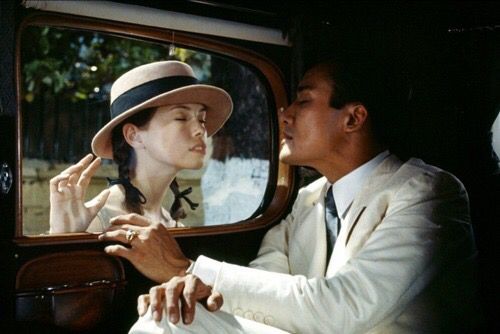
Their romance is born of attraction and desire, but gradually evolves into a much deeper bond. Yet, the film never attempts to convince us that love can solve every problem. On the contrary, it reminds us that feelings can also be defeated by racism, class differences, and family obligations. It is a painful idea because it challenges one of the most common beliefs in romantic cinema: that love is enough.
It is also interesting to observe how the film portrays the protagonist's personal growth. Her relationship represents not only a romantic and sexual awakening but also a phase in which she begins to discover who she is and her place in the world. Meanwhile, the male protagonist displays vulnerability; despite his wealth, he is unable to escape the weight of family traditions and the decisions others make for him.
In this sense, The Lover transcends romance to become a reflection on freedom. It reminds us that love can be authentic and profound, yet also vulnerable to social norms and historical inequalities. The protagonists' story speaks not only of an impossible relationship but also of the opportunities lost when prejudice and expectations outweigh feelings. Loving is not always enough to change the world.
Analyzing this film required me to learn about the cultural context to conduct a proper analysis, although the movie is understandable even without that background, it is clear that the characters' environment shapes their speech and their emotions. I truly relate to this film; the environment I was born into also prevents me from loving freely or doing as I please. It shows me that love is not enough when social or environmental factors carry more weight than the deep love between two people. It is a sad reality, but a very real one.
"We are lovers. We can't stop loving"
9/10
What do you think?
Comments
Displaying 0 of 0 comments ( View all | Add Comment )