



There are movies that you enjoy while you're watching them and then move on from.
And then there are movies that somehow become part of you.
Movies that stay in your mind long after the credits roll. Movies that you revisit not only because you love them, but because they make you feel something that is difficult to find anywhere else. Sometimes it isn't even about understanding them completely. Sometimes it's about the atmosphere they create, the emotions they awaken, or the questions they leave behind.
For me, Mulholland Drive is one of those movies.
I mentioned it briefly in my last blog, but the truth is that it deserves its own post.
Because the more time passes, the more I realize that Mulholland Drive isn't just one of my favorite movies—it is one of those rare films that feels alive. Every time I think about it, I discover something new. Every time I watch it, I walk away with a slightly different interpretation.
And every time I hear I've Told Every Little Star, I immediately think of it.
That song has become inseparable from the movie in my mind.
It's one of my favorite songs, and yet whenever it starts playing, I don't just hear the music. I see scenes from Mulholland Drive. I remember the atmosphere, the mystery, the sadness hidden beneath the beauty, and that strange dreamlike feeling that David Lynch captures better than almost anyone else.
Some movies become memories.
Mulholland Drive became a feeling.

A movie that feels more like a dream than a story
One of the things I love most about Mulholland Drive is that it doesn't behave like a normal movie.
It gives you characters, events, mysteries, and clues, but it never feels interested in providing neat answers. Instead, it pulls you into a world where emotions matter more than logic.
The story begins with Betty, a young aspiring actress arriving in Los Angeles full of hope, excitement, and optimism. Soon after, she meets a mysterious woman suffering from amnesia, and together they begin searching for answers.
At least that's how it starts.
But as the movie unfolds, reality itself begins to shift.
People become different versions of themselves.
Events stop fitting together in the way we expect.
The line between dreams, memories, fantasies, and reality slowly disappears.
And somehow, despite all of that confusion, the movie remains emotionally clear.
You might not always know exactly what is happening.
But you always know what it feels like.
I think that's one of David Lynch's greatest strengths as a filmmaker. He understands that human beings don't experience life as perfectly organized narratives. Our memories overlap. Our fears distort reality. Our desires change the way we see ourselves and others.
Mulholland Drive feels like stepping inside that emotional landscape.
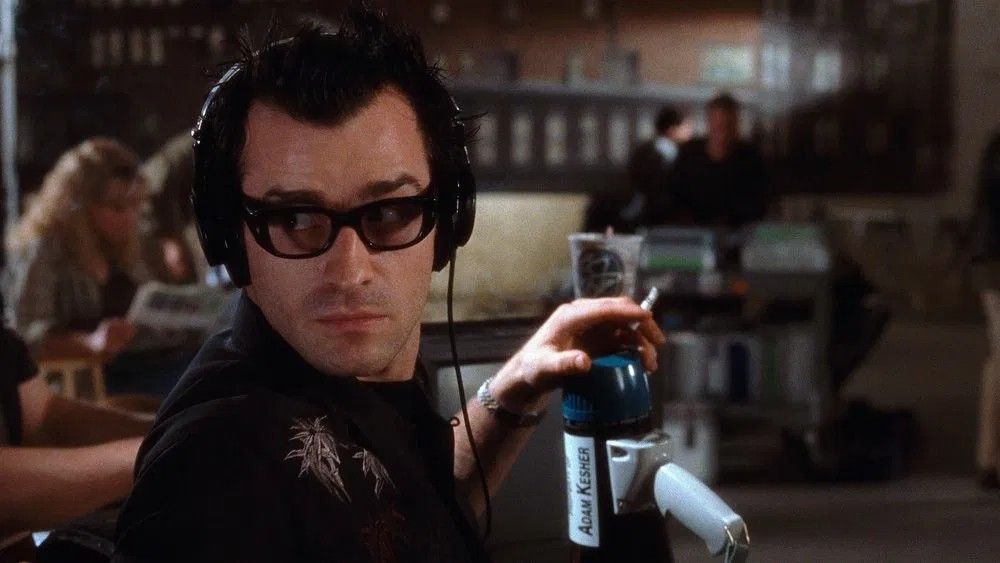
Hollywood, dreams, and disappointment
On the surface, Mulholland Drive is also a movie about Hollywood.
But not the glamorous Hollywood that appears on postcards.
It's about the dream of Hollywood.
The promise that if you're talented enough, beautiful enough, lucky enough, everything will work out.
Betty arrives in Los Angeles carrying that dream. She believes in possibility. She believes in success. She believes that the future is waiting for her.
And honestly, watching those early scenes is almost magical.
There is something incredibly charming about her optimism.
But beneath that dream, there is another reality hiding.
A much darker one.
The movie gradually reveals the loneliness, rejection, obsession, and heartbreak that can exist behind ambition.
And I think that's why it resonates with so many people, even those who have never cared about Hollywood.
Because at its core, it isn't really about the film industry.
It's about expectations.
It's about the dreams we create for ourselves.
And it's about what happens when reality refuses to follow the script we imagined.
I think almost everyone has experienced that feeling at some point in life.
Not necessarily becoming an actor.
But loving someone who doesn't love you back.
Wanting a future that never arrives.
Believing things will turn out one way and discovering that life has other plans.
That's what makes the movie feel so universal beneath all its mystery.
The sadness hidden inside the dream
The older I get, the more I see Mulholland Drive as a deeply sad movie.
Not because it's tragic in an obvious way.
But because it understands regret.
It understands longing.
It understands the desire to go back and rewrite parts of your life.
There is something heartbreaking about the way the film explores memory and fantasy.
The way we sometimes create alternate versions of events inside our minds.
Versions where things worked out differently.
Versions where we became the person we wanted to be.
Versions where the people we loved stayed.
I think that's one of the reasons the movie stays with me so strongly.
Because beneath all the mystery, there is an emotional truth that feels painfully human.
We all carry stories about ourselves.
And sometimes those stories are the only thing keeping us together.
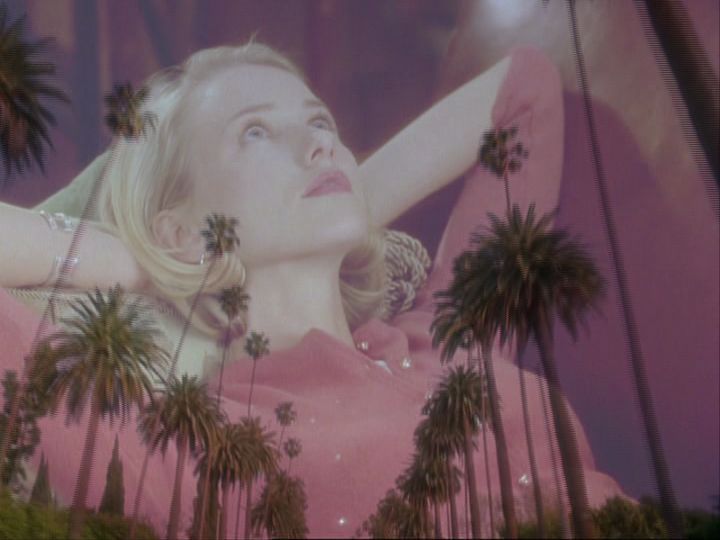
Naomi Watts and one of my favorite performances ever
I also can't talk about Mulholland Drive without mentioning Naomi Watts.
Her performance is extraordinary.
She manages to portray hope, vulnerability, joy, heartbreak, innocence, desperation, and grief with an honesty that makes every scene feel real.
Even when the movie becomes surreal, her emotions never do.
She gives the audience something to hold onto amid all the uncertainty.
And because of that, the emotional impact of the film becomes even stronger.
Whenever I think about great performances in cinema, hers is always one of the first that comes to mind.
Why I keep coming back to it
Some movies reveal everything during the first viewing.
Mulholland Drive is not one of them.
In fact, I think part of its magic comes from the fact that it never completely reveals itself.
Every viewing feels different.
Sometimes I focus on the mystery.
Sometimes I focus on the romance.
Sometimes I focus on the themes of identity and self-destruction.
And sometimes I simply get lost in the atmosphere.
There aren't many movies that reward repeated viewings in the way this one does.
It's like returning to a place that remains familiar while constantly changing.
You recognize it.
But you never fully understand it.
And somehow, that's exactly what makes it beautiful.
My personal review
For me, Mulholland Drive is not just one of David Lynch's greatest films.
It's one of the most fascinating movies I've ever seen.
It's mysterious without being empty.
It's emotional without becoming sentimental.
It's surreal without losing its humanity.
Most importantly, it trusts the audience.
It doesn't explain every detail.
It doesn't force a single interpretation.
It allows each viewer to bring their own experiences, fears, memories, and dreams into the story.
And because of that, the movie feels different to everyone.
I think that's what great art does.
It doesn't simply tell us what to think.
It creates a space where we can discover something about ourselves.
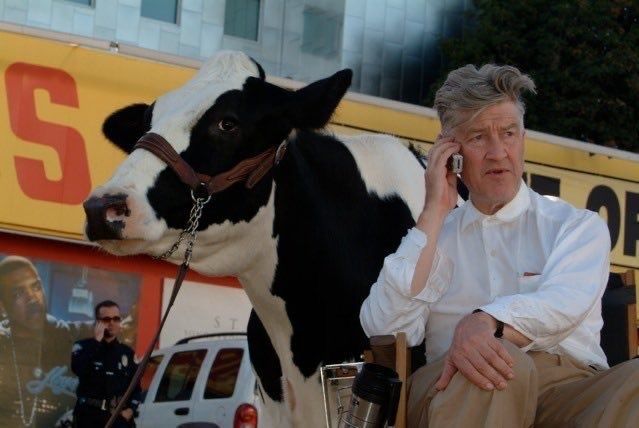
David Lynch and the way he sees the world
It's impossible for me to talk about Mulholland Drive without talking about David Lynch himself.
Lynch is one of my favorite directors, not simply because of the stories he tells, but because of the way he sees the world.
There are filmmakers who focus on plot, others who focus on dialogue, and others who focus on spectacle. Lynch always seemed interested in something deeper and more difficult to explain. He was fascinated by dreams, fears, desires, memories, and the strange emotions that exist beneath the surface of everyday life.
What I admire most about his filmography is how distinctive it feels. You can watch a Lynch film for only a few minutes and immediately recognize his touch. In an industry where so many movies can feel similar, he created an artistic language that was entirely his own.
His work is filled with contradictions that somehow make perfect sense. Beautiful and disturbing. Familiar and alien. Tender and terrifying.
His visual artistry is one of the reasons I keep returning to his films. Every frame feels intentional. The lighting, the sound design, the music, the pacing, and the dreamlike atmosphere all work together to create emotions that are difficult to describe but impossible to forget.
What makes Lynch special to me is that he never seemed interested in giving easy answers. Instead, he trusted the audience. He trusted emotions, intuition, and imagination. He understood that some experiences cannot be explained logically because they belong to a different part of us.
When I watch films like Mulholland Drive, Blue Velvet, or Eraserhead, I don't feel like I'm simply watching a story unfold.
I feel like I'm stepping into a dream.
Or maybe into a memory.
Or perhaps into a place that exists somewhere between the two.
And that's something very few directors have ever achieved.
For me, David Lynch wasn't just a filmmaker.
He was an artist in the purest sense of the word.
Someone who understood that cinema could be mysterious, emotional, poetic, and deeply personal all at the same time.
Final thoughts
Mulholland Drive is a movie about dreams, identity, desire, disappointment, and the fragile stories we build around our lives.
It is haunting, beautiful, confusing, heartbreaking, and unforgettable.
Years after watching it, certain scenes still return to me unexpectedly.
Certain images remain burned into my memory.
And every time I've Told Every Little Star starts playing, I immediately think about this film once again.
That's probably the highest compliment I can give any movie.
It becomes attached to pieces of your life.
It stops being something you watched and becomes something you carry with you.
For me, Mulholland Drive will always be one of those films.
A film that reminds me why I love cinema in the first place.
Not because it provides answers.
But because it makes me feel, wonder, and reflect long after it ends.
And perhaps that's also why David Lynch remains one of my favorite directors.
His films don't simply tell stories.
They invite us into worlds that feel both deeply personal and strangely universal.
Worlds that stay with us.
Worlds that continue to reveal new meanings every time we return to them.
As always, I'd love to hear your thoughts.
What do you think Mulholland Drive is really about?
And if you're interested in reading more about David Lynch's work, let me know:
Would you like to see a review of Blue Velvet or Eraserhead next?
Both films fascinate me for completely different reasons, and I'd love to write about them in a future post <3
Comments
Displaying 0 of 0 comments ( View all | Add Comment )