

Readers have never agreed on whether this change that occurred from the 90s to the 2000s was positive or not. That's why the goal of my entry isn't to tell you which is better between retro and modern North American comics, but instead to analyse the reasons that caused this.
First of all, we should ask ourselves this question: what exact text was removed to make comics so much shorter to read?
1. Thought bubbles
Unlike European and Japanese comic book industries, North Americans seem to have almost completely abandonned thought bubbles, except for a few comics from time to time, in favour of text boxes.
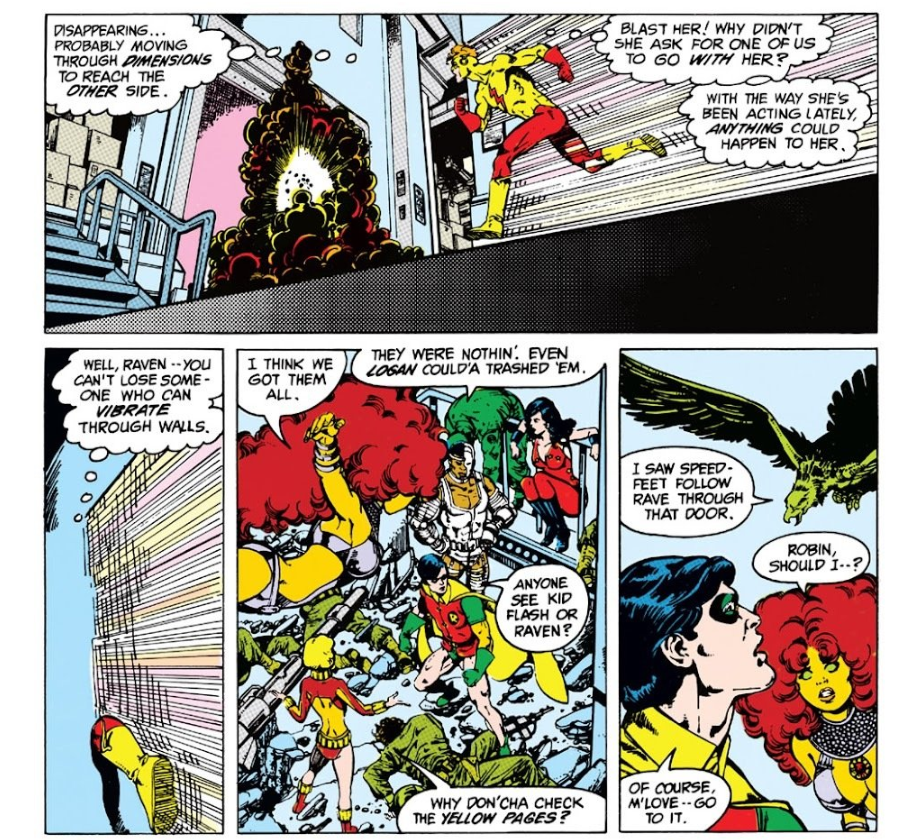
The New Teen Titans (1980-1984) #39
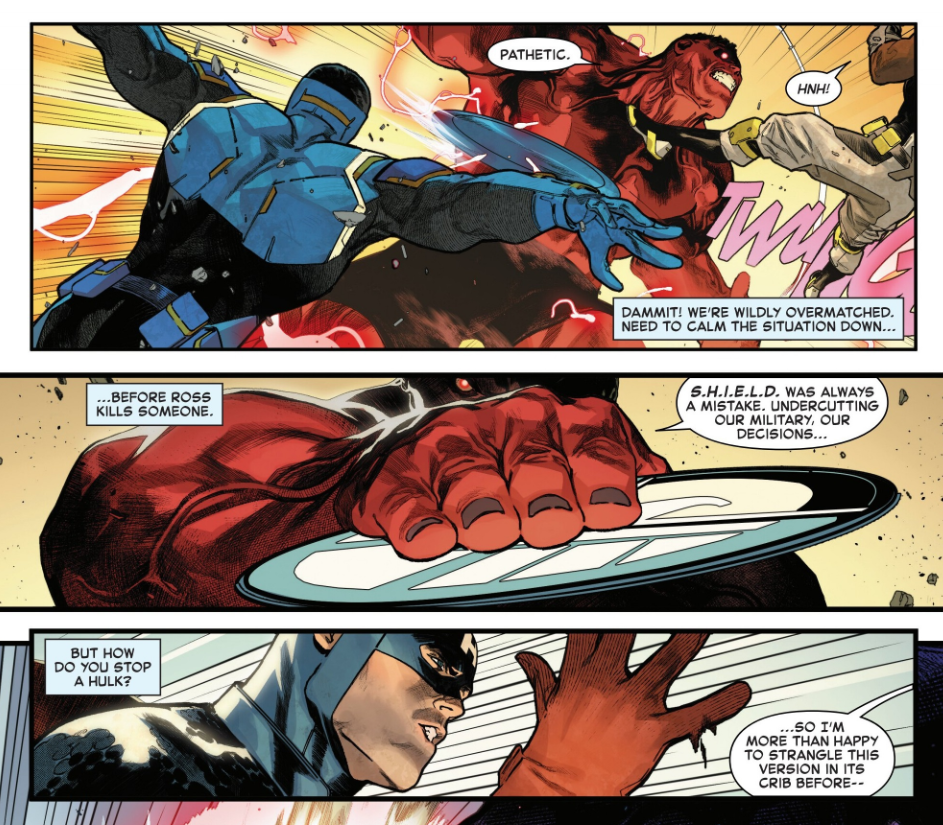
Captain America (2025-) #7
As you can see, modern text boxes are now used for passive narration, while thought bubbles were used for active thoughts. It gives a more ''literary'' narration. It's possible that text boxes were introduced to replace the omnicient narrator boxes:
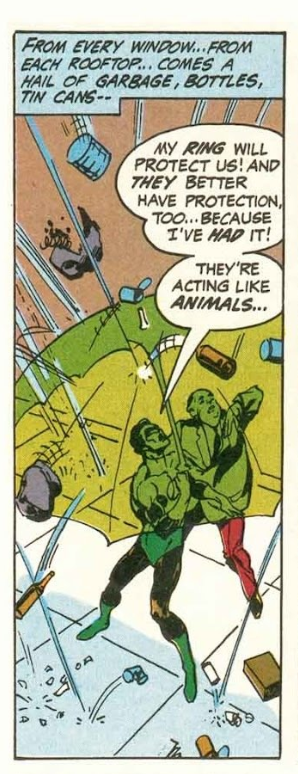 Green Lantern/Green Arrow (1983) #1
The disappearance of thought bubbles and omniscient narrator boxes is both positive and negative. For example, thought bubbles were often used lazily to tell us the plot and character's motivation, like in those NTT panels above. Kid Flash just explained to us what Raven was doing in a detailled way while he's focused and in action, and then he told us that he could vibrate through walls... a capacity we know every speedsters have. It's nothing new, and it was also shown in the same panel. It was drawn. Maybe not clearly drawn, but with a better drawing we would have understood.
What could justify this is the advice, attributed to Stan Lee, given to every writers: ''Every issues is somebody's first issue''. That is correct, especially since, at the time, you couldn't just google informations about a character you didn't know well. The book in your hands had to give them to you, whether it was a #1 or not, because comics were for kids and disposable after reading. Furthermore, issues weren't printed for very long, so people often couldn't start by #1 if it wasn't printed anymore.
Don't worry, this wasn't the case for every thought bubbles, a lot of them were useful to understand characters who don't speak a lot but think a lot.
Because of the same advice, omniscient narrator boxes were used to remind the reader of what happened previously, or sometimes to point out something obvious that we can already see in the panel, like above in the GL/GA panel. We see the garbage falling, why would they write that? Add maybe a second small panel with the windows where the garbage comes from and the reader easily understands what's happening. Now, authors just add small boxes with the issues they advice to read to understand the story better. In my opinion, it's not a bad change. Describing something the art was showing was really, really stupid. It was useless filler written like a novel instead of a comic.
With the new text boxes, characters' thoughts are shorter but more realistic and we can enjoy the art more. However, we can't read the thoughts of secondary and background characters anymore, making them sometimes say out loud something that should have been a thought. I don't have any particular example in mind, I just remember thinking this while reading some comics.
Now that we know what type of text was removed in comics, we need to know: why?
2. Digital art and the advances in printing
Digital art was created in the 60s. It consisted mostly of algorithmic drawings, so it wasn't really the most accessible way of making art. But in the 90s, the arrival of softwares like Adobe Photoshop made digital art a lot easier and comic book artists slowly began drawing their comics this way. Then, with the advancement of graphic tablets and styluses, digital art became a mainstream practice in the comic book industry. At the same time, publishers gave up on their idea of having a ''house style'', giving more freedom for artists to have their own style.
The printing techniques and quality also evolved. I won't explain in details how, but this progress, as well as companies that have switched to glossy paper, allowed artists to use more colours and do phenomenal illustrations like this:
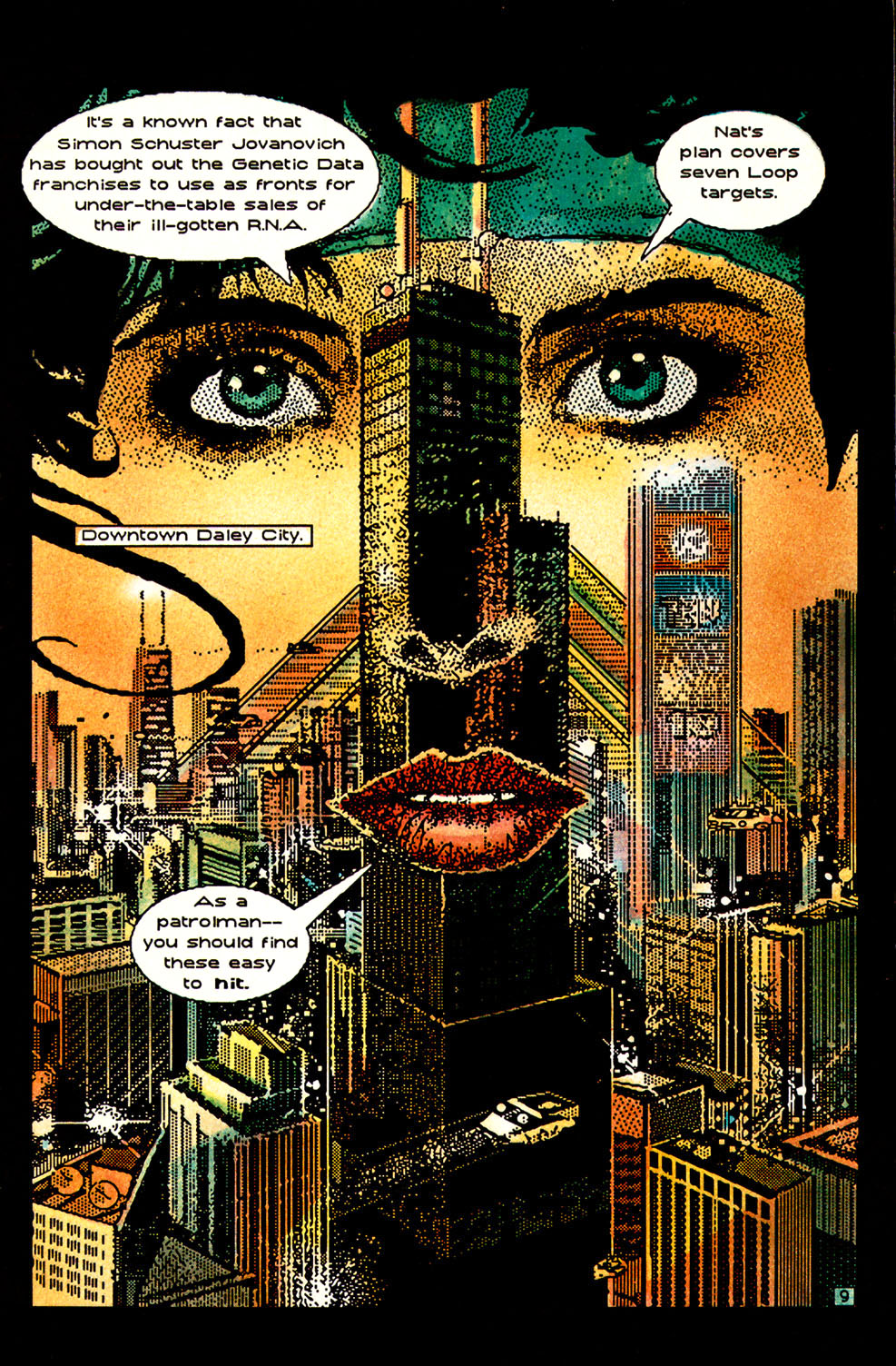
Shatter (1985-1988) #1
This is the first North American comic book drawn on a computer. The art quality wasn't as good as the one we do nowadays yet, but it was already a huge progress.
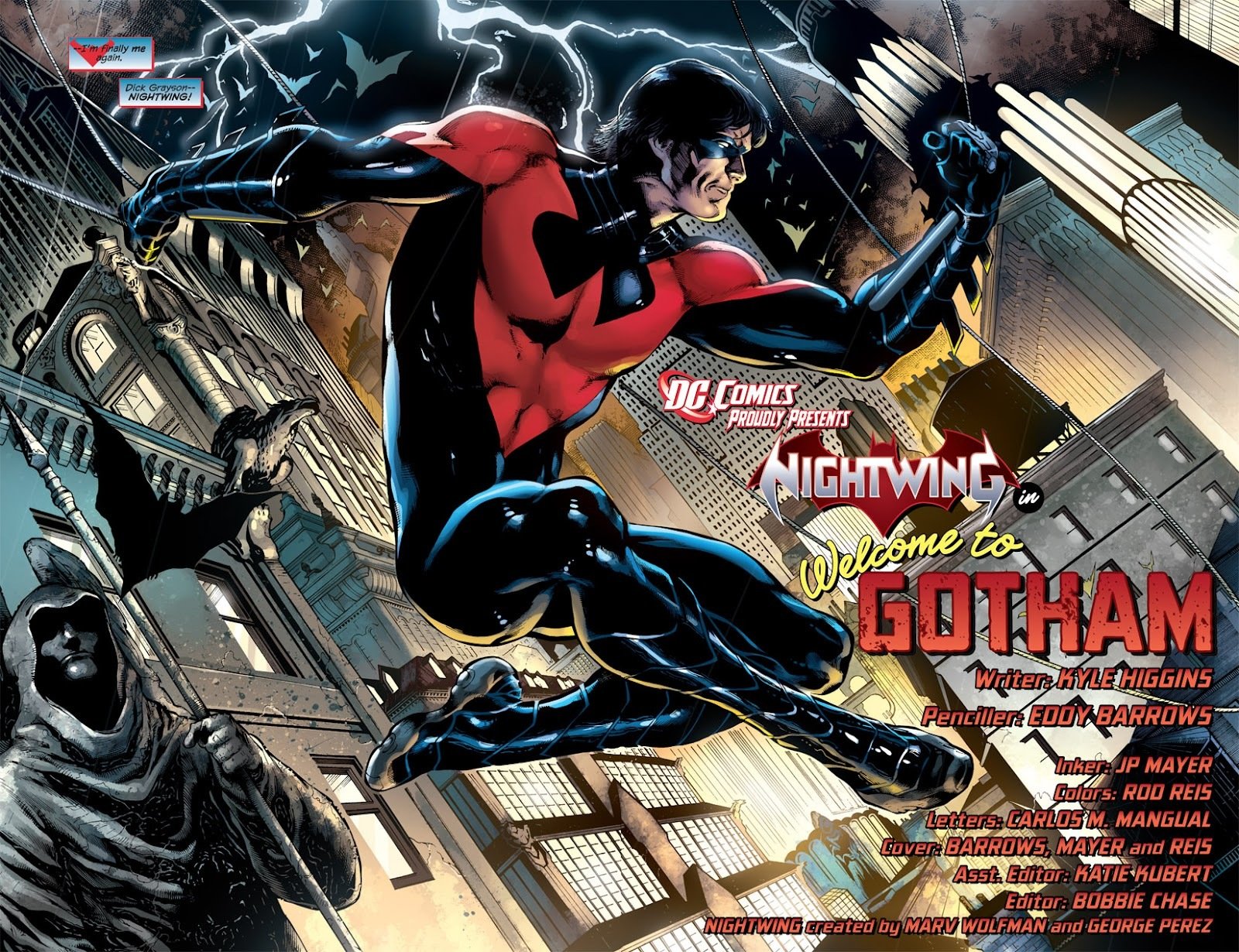
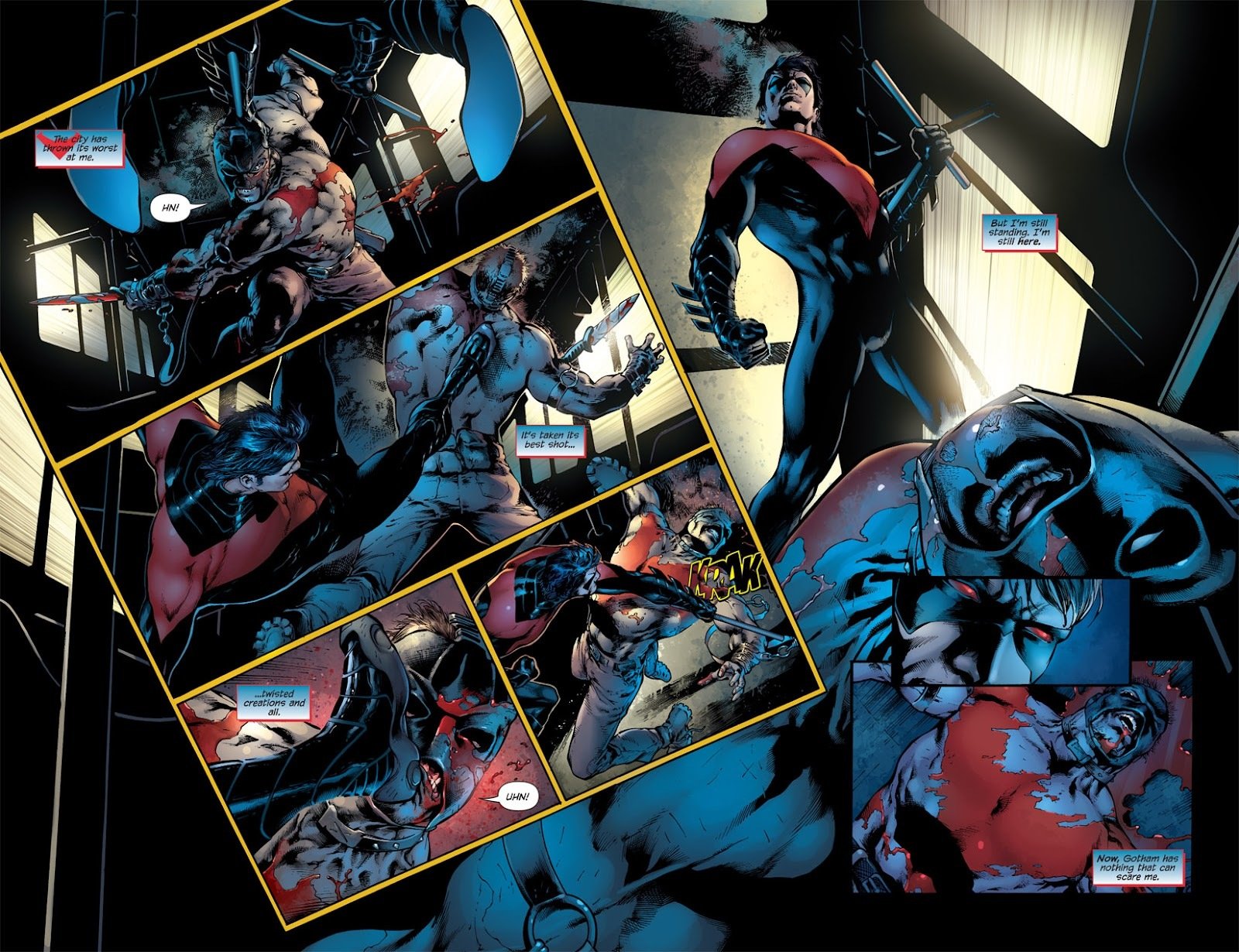
Nightwing (2011-2014) #1
And now we have insane and beautiful art.
You're probably wondering what's the correlation between art and having less and less text in North American comics?
Well, we have less text for the art. When before the 90s, the text alone could be enough to understand what's happening in a comic, now the art tells the story too, because the lore of some superheroes is more mainstream so we don't need to be reminded of everything and everytime. The amount of words was reduced so the artists' work could gain importance and not be ''just illustrations'' in the middle of big bubbles. The pacing of newer comics also use a different approach involving more showing than telling, but this will be explained just after.
Anyway, this is a very good change. Comic book fans aren't just readers, they appreciate good art too, otherwise they would read novels. We all love good art. We do not thank comic artists enough, and companies aren't paying them enough either.
3. Decompression
The first trades as we know them nowadays appeared in the 60s with Marvel, who wanted their comics to last longer, to be more accessible and sold outside of comic book stores, in actual bookstores or libraries with actual shelves. Collected editions also sells at higher price, hence a higher revenue per sale, since they collect six issues of a series, supposed to form an arc. So other companies started selling trades like Marvel, and right now it may be the best format to buy comics.
Completing trades became the goal of companies, and it's what created the decompression storytelling style. Writers stretched out three issue stories into six to complete a trade, while adopting a more ''cinematic'' style. Yes, this is also linked to the growing popularity of TV in the 90s. Less text, less panels, more breathtaking art.
And after reaching the trade, if the sales are low? They can cancel the series. Their only goal is to complete the trade. For money. Right when Marvel went bankrupt.
--- That's why the current Marvel comics are so bad and short, despite being rich now, because they're still stuck in this mentality and their focus and desesperation for the MCU played a part in it. They work less on their comics and more on the MCU and their video games because it sells more. Issues are empty with nothing new or interesting, and they cancel their runs after #15 to publish a new #1. They also make a lot of comics just to promote their movies and shows, like the one for X-Men '97 season 2. The story isn't bad, but wasn't necessary to promote the show, especially since compagnies made movies, shows and games to promote the comics and not the other way around. Marvel unfortunately changed a lot. Thank God some of their comics are still great. ---
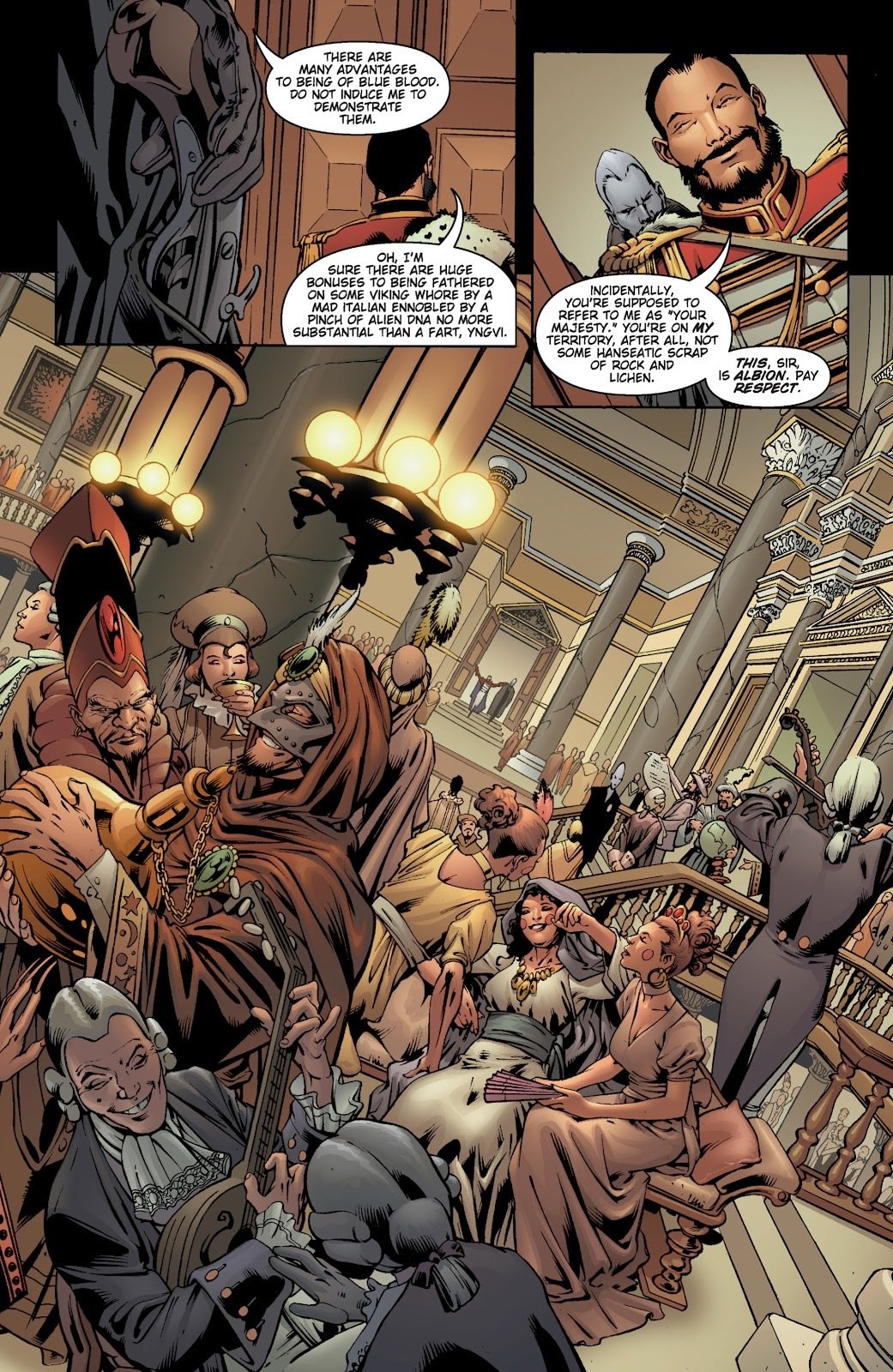
The Authority (1999-2002) #5
This page is a perfect example of decompressed storytelling and ''cinematic'' style. It gives us two small panels at the top with some dialogue and then a huge panel with an illustration, to show the reader the people and decor in the room, like a movie would do with a wide shot. The only action? The man entering the room. That's all that's happening on this page. Is it a bad thing? Not always. When well made, like in this example, ''cinematic'' style comics can be brilliant and fascinating to read. However it quickly becomes boring.
In an old comic, we'd have had from four to nine panels with the equivalent of three pages of actions in just one.
4. Manga's influence
There's not a lot to say for this point because the influence of mangas is obvious. It's probably what people read the most nowadays. After Japan, the second country reading the most mangas is France, and then it's the US. Yes it may seems surprising but French people read more mangas than Americans. But just with this information we learn that mangas spreaded on at least three continents. We could have had two other Asian countries in this ranking, but no, there's an European and a North American country.
So American comic book publishers were inspired by mangas for the visual storytelling and cinematic pacing. Americans adopted larger, more dynamic panels and slower pacing. The character design was also affected with more expressive faces, stylized eyes, distinctive hairstyles, youthful-looking protagonists...
Mangas also encouraged American publishers to write other genres than superheroes like slice-of-life, horror, science fiction, romance...
And of course specific creators and works were influenced too, like Bryan Lee O'Malley with his famous comic book series Scott Pilgrim.
In conclusion, a lot of advances and changes happening at the same time caused this loss of text in North American comic books. Is it good? Is it bad? No one knows. In any way, every comics are different and there are still comics with more text being made nowadays. Enjoy your comics and show support to your favourite creators!
I hope this explanation was interesting, I had fun writing it. Don't hesitate to tell me about mistakes I may have made or points I could have forgotten.
Comments
Displaying 1 of 1 comments ( View all | Add Comment )
blndsndoll4mj
I'VE NOTICED THIS TOO!! i think it depends on the story, some are just naturally super simple. and i also think some people prefer looking at the comic art. personally i like when there is a lot of text and i prefer the retro comic art sm more.