


Capitalism, while correctly valuing property, extends property to that which is not the attribute of the claimant. But property means "attribute," and is only justified on the grounds of having its existence owed to the existence of some creator, whose attribute it is by extension of being owed to them, much as brown hair might be said to be an attribute, or property, of Sally.
Sally, with her brown hair, works "for Tom." Really, she works to access resources, and her working requires access to resources that Tom has legal control over. But in common terms, she works for Tom.
Because she does not have access to resources to access more resources with-- which we call capital or licensing-- she must work for Tom. She has no other legal option. But in order to work for Tom, she has to sign an agreement with Tom. And because Tom controls the resources, that agreement reflects Tom's interests. The agreement says,
Sally can work under Tom's license. She will work for Tom, and Tom will give Sally a fixed portion of the variable Sum that Sally brings in while working for Tom. This is her contract wages. Tom will keep the rest. The rest that Tom keeps is called profit. Tom keeps the profit.
If Tom assists Sally, some of the profit is owed to their collective force, the amount extra that is produced from their working together, which is more than they could make in total if working separately. But if Tom just lets Sally do all of the work, the profit is entirely Sally's property, because owing its existence to Sally's work. Either way, Tom gets to take some or more of Sally's property, that which owes to Sally's existence.
This legal form of cannibalism allows Tom to subsist from Sally's existence, upon her property, which Tom takes from Sally. Sally has only property rights under capitalism to that amount of her property that Tom says that she can have for herself. This is usually just enough so that Sally can keep existing to produce property for Tom to take. If Sally had full property rights, this would be impossible.
But Tom does not have full property rights either. He has a plot of land of little value, and he operates from out of a mobile home that serves out of the business's office. This mobile home is capital that belongs to Alice. Alice worked to buy this mobile home, and it was her property. But Tom has, over the years of renting it, more than paid the cost of the original purchase price. It is, as a matter of fact, Sally's property, because Sally is the one whose labor has compensated Alice for her property, making it her attribute instead of Alice's threby. But as legal matter, Alice is the recognized claimant, and has the privilege of continuing to siphon Sally's property from her by way of Tom's agreement with her. This right is recognized as perpetual, meaning it can be used forever, until the end of time (unless some other factor stops it).
Land cannot be human property, because it is not a human attribute. There is no land that owes its existence to humans. Even Holland, which has been artificially cleared from flooding and has had dry land built up, is not the creation of humans, but only a modification of them. When the land is modified, it is no longer treated as land, but as capital, the mixture of land and labor.
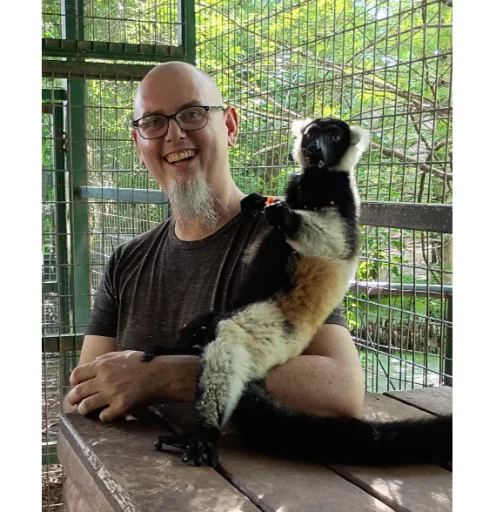
But Jimmy doesn't know this or doesn't care. He is Sally's landlord. Say "Hi" to Jimmy. The thing about Jimmy is he is a really sensible guy and does nice gestures for Sally, like give her holiday rental breaks or surprise her with free lawnmowings.
As Sally's landlord, Jimmy claims to own the land under Sally's feet. And he has a legal right to do this, even though the land can never truly be his property, his attribute, because land is not made by man but by God, who is Nature. But Sally needs a place to live. Having no legal right to exist upon the Earth, and much as she did with Tom, she makes an agreement with Jimmy. It says,
Sally can live on Jimmy's land. She will pay Jimmy a fixed rent that is roughly equal to all of the income she has after feeding and clothing herself.
The rent that Jimmy receives is entirely the property of Sally. Sally exchanges her property for the privilege from Jimmy to use nobody's property, because nobody created the land.
Tom and Jimmy sometimes fight, because Tom says Jimmy does not leave enough for Tom to take from Sally, and Jimmy says that Tom takes too much from Sally for her to afford her rent. Sally and Tom both complain about Alice sometimes. There is nobody complaining about Sally, except when Tom complains that she hasn't bathed or washed her clothes in a few days.
--------------------------------------------------------
Open Invitation to Comment
Feel free to respectfully comment, whether in favor or against. But be prepared to defend your view!
See more!
You can find more like this on my real blog, Ambiarchy Blog, where I cover topics such as:
- Pantheism: The Belief that Nature is God
- Mutualism: The Belief in Anarchy and Cooperation
- Witnessing Shell Theory: An Alternative Natural Cosmology
- Henogenic Volution Out-of-Everywhere: An Alternative Approach to Evolution
- Ambiarchy: An Alternative to Neo-Anarchism
Comments
Displaying 5 of 5 comments ( View all | Add Comment )
X
Capitalism is actually the exact opposite of being forced to work FOR/under somebody for all practical purposes compared to every other system. I've personally tried rejecting the entire current system and only working for myself from nature, and it's easily 100x harder even with all the goodies and tools I have to make it easier/more efficient like tow behind tillers and machinery for automating planting among many other things.
"she must work for Tom. She has no other legal option."
That's strictly false. What about raising capital for an idea? That's really the entire underpinning of capitalism. You can be at zero and get funding if you are charismatic enough and have a good enough idea or even have a friend that is who can handle the first aspect for you in a joint venture.
Getting capital from currently successful capitalists or people in general is in effect taking their property as you describe it in exchange for nothing. (initially, at least other than words and good faith in each other usually.)
In a tyrannical socialist/dictorial system that's when you truly have no choice of what to do for work. e.g. North korea sends some of their male citizens with families to Russian logging slave labor camps. They will kill your family if you try to escape or you refuse to work and then you. Fear and coercion/force is the main factor that keeps people working in socialist/capitalist oligopolic systems. In a capitalist system you can quit freely at any moment and not be tortured/shot to death. 😁 Not only is there tom to work for, there is also bob, and many more, if you don't like one you go to the next and they can't profit from your labor.
A capitalist basically just convinces other people with resources to believe in them even though they may fail and lose all of their money. It's in the mutual good/best interest of both parties to work together. Just because there is a contract doesn't mean it isn't mutually beneficial, it just makes sure both people are protected and there are guardrails up on the relationship and what each person expects of one another. If one person doesn't feel the contract is fair they simply don't agree to it and don't engage in that endeavor. (I've rejected easily 100 contracts of various types in my life for different reasons I found unfair to me or otherwise.)
Most wealthy people/capitalists started by working for someone else. In a sense, under a capitalist system where everything is based on voluntary exchange, even the wealthiest are working for everyone/what the people want. (I understand our current system is late stage crony/capitalism which is right before socialism though so this is applying less and less due to there being no other options of whom to work for in many sectors which also means consumers have no other choice but to still support that company that is now incentivized to not give the people what they want to maintain power, but instead a small group of regulators what they want such that they maintain the unfair corrupt legal advantage which prevents competition (threats to their power/property) from forming.)
"This is her contract wages. Tom will keep the rest. The rest that Tom keeps is called profit. Tom keeps the profit."
That's true! But don't forget the fact that Tom also keeps all of the risk (If he is a sole owner of course, otherwise the risk is spread across all stakeholders.) associated with the endeavor, which is also a function of his/their labor but at a higher stakes poker table so to speak. There is almost always more to gain, but there is always more to lose. Even for the very small fraction of neobusiness owners/nouveau riche that maintain their wealth despite ever changing technologies, competitors, consumer tastes etc. All of the equity of a wealthy business owner is gone within one successor generation aproximately 50% ish of the time, and over 80% of the time within two generations.
That's why modern crony capitalists often seek to leverage large monolithic governments to make it such that they are the ONLY "tom". e.g. putting up insane barriers to entry to competitors often under the guise of ""public safety"". The few bad actors spoil/decay the system if the government representatives cave in to their bribes/manipulation/extortion/etc. AND if they people don't apply pressure to prevent this from happening. It's unfortunately very hard to apply counterpressure to something they call the "Save the children and keep everyone safe and save the planet act" 😂
I haven't quite figured out how to beat that last one yet. Maybe I just need to invent a new word for it. 🤓
Fafety? (fake safety?)
Let me know what ya think bro! 😃
The system that I described is the system of capitalism. In the description, I showed rationally how capitalism forces Sally to work: it denies her natural property rights. It does this by claiming them from her indirectly, by means of artificial property claims belonging to Tom (boss), Alice (capitalist), and Jimmy (landlord). These artificial property claims allow Sally's natural property to be appropriated as Tom, Alice, and Jimmy's artificial property. This occurs at a rate such that Sally is not able to save money.
I think your reaction is less that you have found a way to demonstrate an error in my analysis, and has more to do with your attachment to particular words, in this case capitalism, which you take to be a package-deal that includes property, money, and markets. But property, money, and markets can exist without capitalism. Capitalism is a particular condition on property, money, and markets that results in a ruling class, of landlords, capitalists, and bosses. This particular condition is that of private property, in the sense of property owned by someone other than the user/occupant, which allows for the existence of landlords, capitalists, and bosses. The taking of rent by the landlord, interest by the capitalist, and profit by the boss is just another tribute, such as the taking of taxes by government. The taking of such things requires violence or the threat thereof. Thus, Sally is living under constant threat of eviction by force of the police if she does not pay Jimmy his protection money.
"What about raising capital for an idea? That's really the entire underpinning of capitalism."
Capitalism is not simply a system that allows capital ownership, but refers specifically to a system where capital is the orienting principle as opposed to other principles, such as reciprocity (which mutualism favors). Other systems, like mutualism, allow for capital holdings.
Capitalism is a system where the holding of capital is unique, because rare, making the capitalist stand out from everyone else. Because capital is rare in capitalism, the capitalist can use their capital to exploit and control others. This is why capital is the identifier and orienting principle in capitalism. In mutualism, everyone is a capitalist, and so holding capital is nothing unique to be identified as a distinguishing factor or orienting principle.
There are only three factors in economic production, which means that there are only three fundamental input-types in the economy. These are land, which in economics refers to all natural resources (including even wild animals and abandoned capital); labor, which refers to human time and effort; and capital, which is the admixture of the other two, capital being land that has been formed by human labor into a product (a secondary qualification distinguishes commodities from capital, with capital being a commodity that is used to assist in production, but that is not pertinent here).
Since Sally does not have land, except that land which she cannot save upon because paying what would be savings as rent, she has no land with which to create any meaningful capital, and so cannot herself become a capitalist. Capital is the admixture of land and labor, and she might have a little bit of labor after giving most of it to Tom, but she doesn't have any land to mix the measly amount of labor she has for herself with. Sally is now being victim-blamed.
Sally may be able to make appeals to friends. Say she has a friend, Bertha, who is kind of like Tom, and has some extra money. Bertha may show favor on Sally and give her a hand up. In this case, Sally has a privilege from Bertha, but she is still lacking in her natural rights. Because she is lacking in her natural rights, she depends on Bertha for favor. As such, Sally is reliant upon her charisma and appeals made to Bertha, these appeals serving as payment in-kind to Bertha. Most people, however, are nothing like Bertha. And most people in Sally's situation do not have the charisma or appeal to subsist on privileges offered to them by friends. But if they had rights they could take care of themselves, without having to set aside their authenticity and genuinity to appeal better to Berthas.
Communism and state-socialism are indeed atrocious. But that is really because they make of the state the capitalist, which can then take not only taxes, but also all of the profit, interest, and rent. Capitalism and communism are just two sides of the same coin. Neither acknowledge Sally's natural property rights, her right to her attributes.
When you say "capitalist basically just convinces other people with resources to believe in them even though they may fail and lose all of their money," you are describing a capitalist who has received a loan. But the only reason loans are scarce, such that not everyone can get one, is because of capitalism. In a mutualist society, everyone would have the ability to become a capitalist because a) having free access to land, and b) having access to free, secured credit. That is, Sally can mix her labor with her land, and then take her product to the bank to be used as collateral for a loan to start up a real business. In mutualism, everyone is a capitalist, so nobody is a capitalist in any meaningful sense of distinction from others.
When you say "wealthy people/capitalists started by working for someone else" it is clear that you are a true believer in the national economic myths of nations, but this is not actually the case. Most capitalists are capitalists by means of either inheritance or loan. There are rare cases of "self-made" capitalists, but even those capitalists rely on governmental policies that allow capitalism to exist, and so to that extent cannot be considered "self-made." Capitalism is inherently "socialist" in the diminutive sense, insofar as it requires socialized tax money to keep it going ("anarcho"-capitalism is not only a false ideology, but is also unworkable for capitalists, or else the American founding fathers would have established an anarcho-capitalism instead of an oligarchic republic, which was established instead to protect capitalist property). This is true even of "non-crony," laissez-faire capitalism, which applies the principles of laissez-faire or freedom of exchange to foundations of stolen property, much as if a bazaar of pirates trading their plunder freely. Free markets are great, but without free land and free credit, what is being freely traded is just plunder.
*Edited for code injected by FW
by Will; (edited); Report
Tried a couple times to edit that code out, but it won't let me. Oh well! :P
by Will; ; Report
I should have opened my reply with appreciation for your comment. So I'll say it now. Thanks for the comment.
by Will; ; Report
This is a test reply.
by Will; ; Report