



⋄⋄⋄ PLEASE READ COMPLETELY BEFORE COMMENTING! ⋄⋄⋄
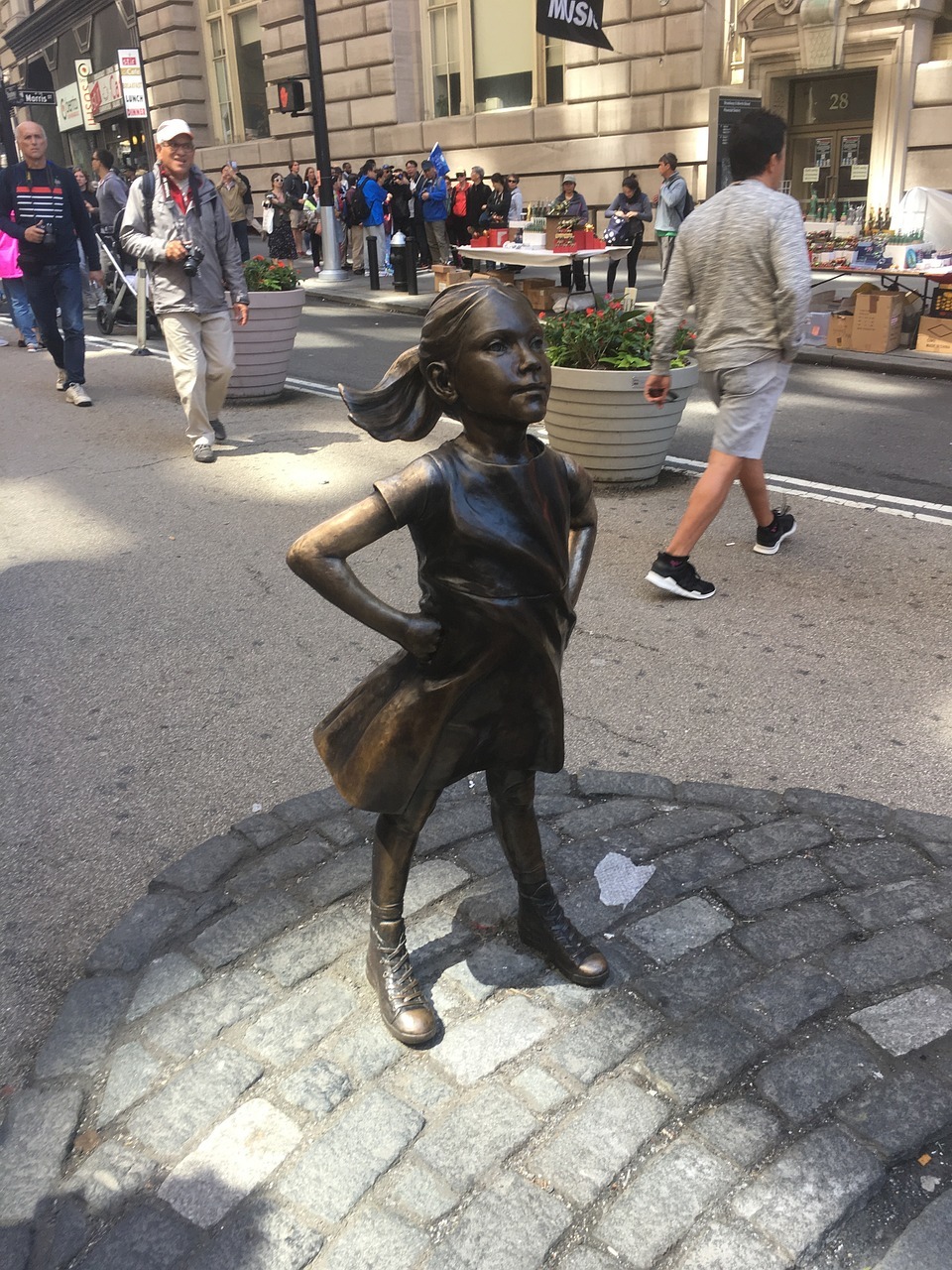
It stands with its chin raised and hands planted defiantly on its hips, facing down something massive, powerful, and unmoving. Its name is Fearless Girl, and it is one of the most famous statues in America and one of the strongest visual representations of female power anywhere.
Placed directly across from the New York Stock Exchange in lower Manhattan, the statue broadcasts the strength and resolve women have always possessed.
However, just as it did when it originally stood opposite Charging Bull, the sculpture created to symbolize the “bull market” and America’s economic might, Fearless Girl unintentionally sends a subtle and unwanted message.
By positioning her against symbols of capitalism, the statue can be interpreted as suggesting that women stand firmly against our economic system. That implication distracts from what the statue actually represents: women’s empowerment.
In my view, American women deserve to have Fearless Girl placed somewhere that highlights the rise of women in this country, somewhere that conveys advancement without any confusing or conflicting interpretations.
 I believe there is only one place in New York City where a sculpture of Fearless Girl’s significance truly belongs: in front of the Brown Building at 23–29 Washington Place in Greenwich Village.
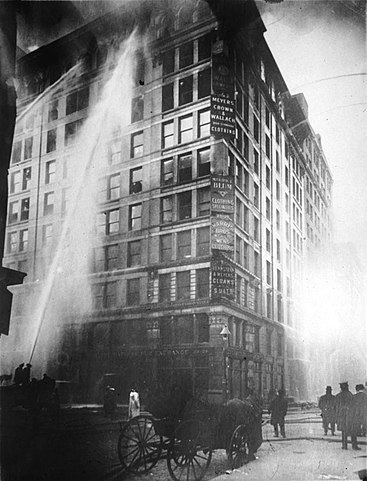
Formerly known as the Asch Building, it was the site of the Triangle Shirtwaist Factory. On March 25, 1911, a raging inferno tore through the top three floors, where 123 seamstresses and 23 men worked behind locked doors. Most earned as little as six dollars a week, which is just over $210 today.
The exits were locked because the factory owners wanted to prevent unauthorized breaks and deter theft. Those sealed doors doomed almost everyone on those floors when the fire erupted.
In a haunting precursor to the horrors that would unfold at the World Trade Center in 2001, some trapped workers jumped to their deaths. Others waited helplessly for the flames to consume them or for the smoke to deny them air.
Despite the massive loss of life, most of it female, the factory owners were not convicted of murder or manslaughter for locking the exits. Instead, they received an insurance payout of about $400 per victim, which is more than $14 thousand today. In total, the owners collected over $2 million in modern terms for deaths caused directly by their policy of locking exits.
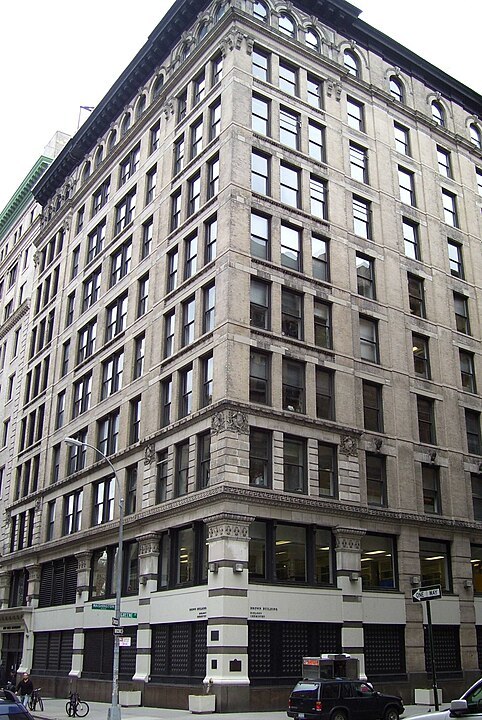 In 1911, scores of women, girls, and a few men were trapped and left to die by heartless employers, and the courts literally discounted their lives. Placing Fearless Girl before the Brown Building would stand as a powerful rebuttal to those atrocities and a symbol of how far women have risen since the tragedy of the Triangle Shirtwaist Factory Fire.
Women in America have advanced from sweatshops to boardrooms, from locked exits to leadership roles. The Brown Building, with Fearless Girl standing defiantly outside, would honor the women whose lives were undervalued, whose deaths were never avenged, and whose modern counterparts continue pushing forward despite powerful forces aligned against them.
That is my opinion. I would love to hear yours in the comments below.
All the best,
–RWARwriter
Note: Earlier versions of this were previously seen on SpaceHey and WordPress.
Those versions are now deleted.
Copyright © 2026 by Red, White and Real
Comments
Displaying 2 of 2 comments ( View all | Add Comment )
⋆ 𝒜𝓂𝑒𝓉𝒽𝓎𝓈𝓉 𝒟𝓇𝑒𝒶𝓂 ⋆
(edited) Report
Honestly, I don’t think Fearless Girl should be a thing. These gender‑based symbols keep feeding the idea that women are constantly suffering or “less than,” and that’s exactly why stuff like this gets made, to reassure women they’re equal.
But men and women are both human. Humans struggle. Humans get mistreated. Humans face injustice.
Women don’t universally have it worse than men, and men don’t universally have it worse than women. It’s not a gender issue it’s a human one. ~An American Woman
Thank you for responding. Truly, I wasn't approaching the issue from such viewpoints. I never fed the idea that women are suffering or "less than." If anything, I am celebrating the achievements of women—their progression in society—while addressing the placement of the statue.
As for being a thing, Fearless Girl is almost universally viewed as a symbol of female empowerment. Knowing that, my entire approach was based on that symbolism, on its positioning, and on the history of the Brown Building to relay my belief.
Men and women both face challenges, of course. Please note that fact was never disputed in the article. While I briefly touched on challenges that face women, I never detailed what those issues were in order to maintain the focus on female advancement and statue placement.
Women absolutely don't need me to reassure them of their equality. That's not what was written, and it's something I don't feel I'll ever have to do.
Regards,
—RWARwriter
by Red, White and Real; ; Report